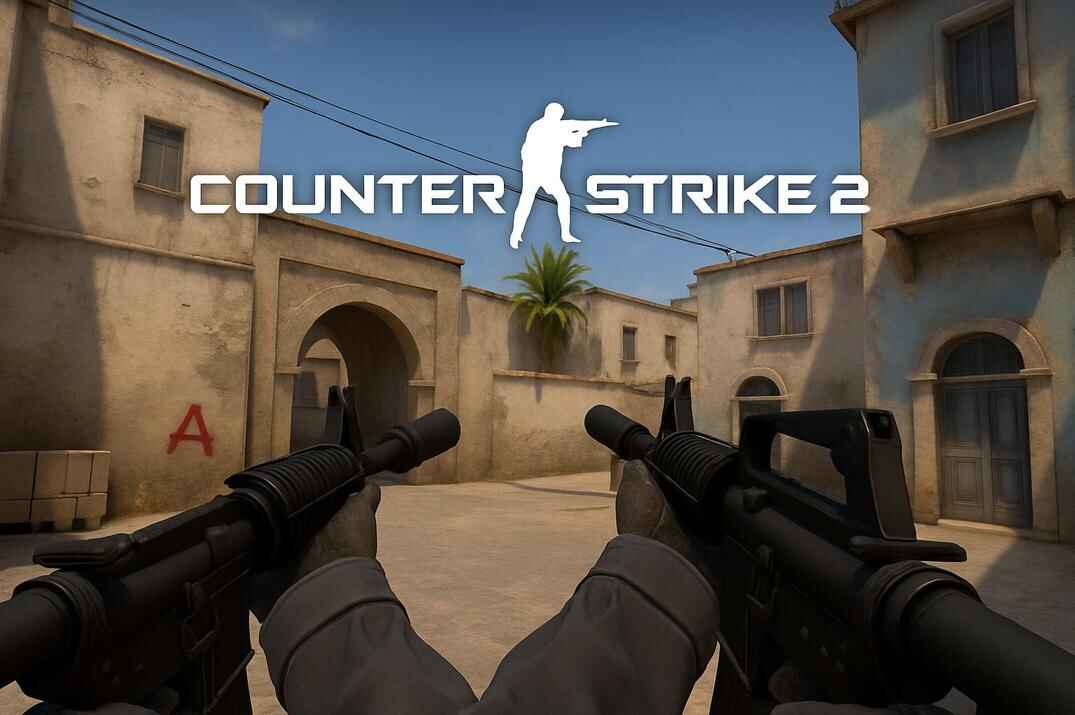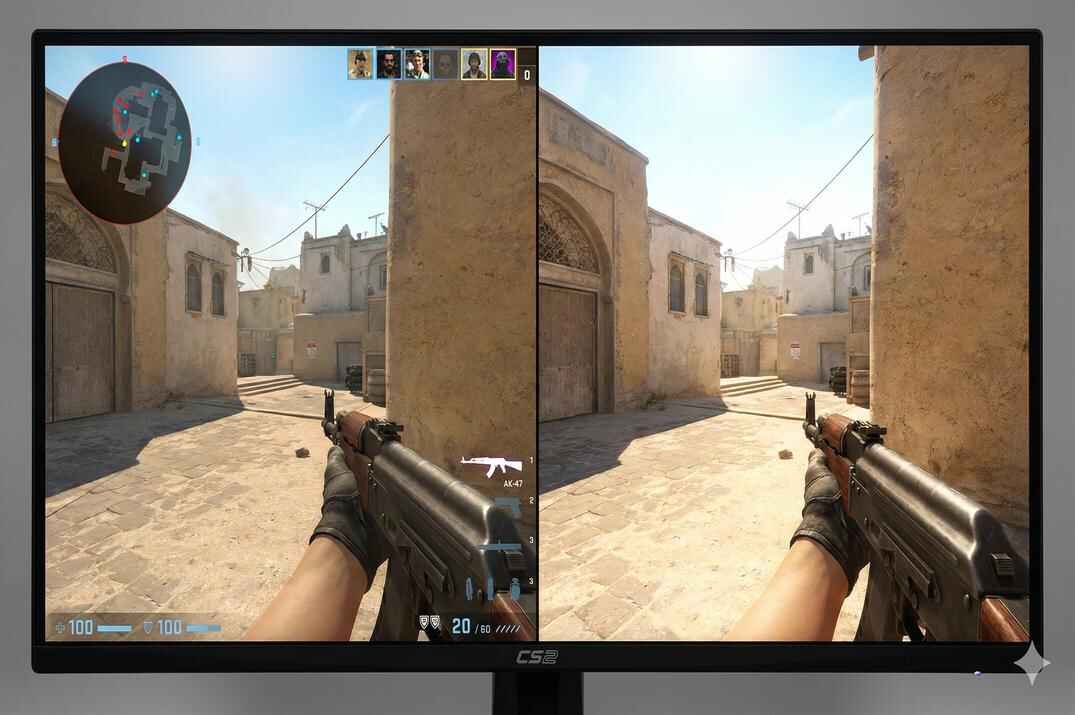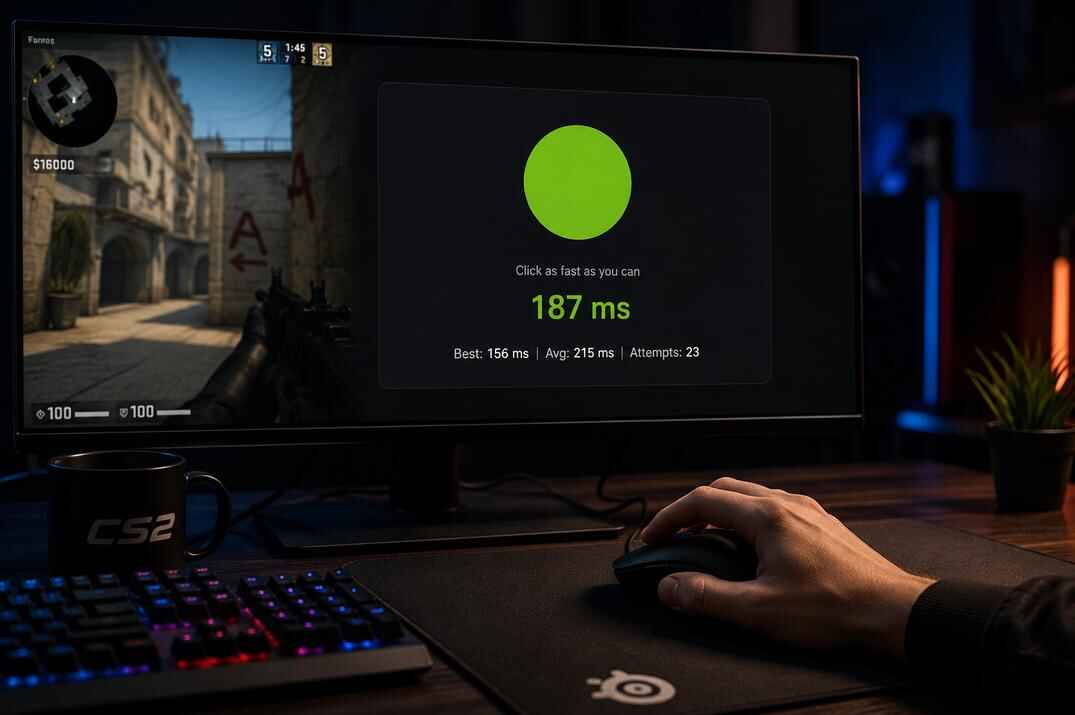
CS2 reaction test on a monitor at a gaming desk

CS2 Reaction Test: How Fast Do You React?

Click when the signal appears and get your reaction time in milliseconds. Three modes, three signal colors, a leaderboard, and what a good reaction time really is

This CS2 reaction test measures the time between the signal and your click, in milliseconds. It's not an aim trainer and it doesn't prove how good you are at Counter-Strike 2. It just gives you an honest number: your last result, best, average and how many attempts you made.

It's also about attention, not only speed. In False Start mode some signals are the wrong color, and clicking on them costs you. Do a few runs and you get a much better baseline than from one lucky click. And yes, it's fun.

CS2 Reaction Time Tester

Click the field to start, wait until it changes color, then click as fast as you can. Clicked too early? That's "Too soon", the round doesn't count. Every hit updates Last, Best, Average and Attempts, and at the end of a session you can save your score to the leaderboard under your nickname.

Start the CS2 Reaction Test

Test your reflexes
🚫
FALSE START!
+200ms penalty
⚑
Click to Start
Last
-
Best
-
Average
-
Attempts
0
πŸ† Leaderboard
Loading records…
⚑
Session Complete!
Best
-
Average
-
Attempts
-
Penalties
-

How to Use the CS2 Reaction Test

Pick a mode and a signal color, then click the test field. Mode and color are locked while a session runs and free again as soon as it ends.

Mode Rounds How it works Your score
Classic 1 Wait for the signal, click, see your time. That one click
Streak x5 5 in a row Five signals back to back. Clicking too soon restarts the streak. Average of all five
False Start 5 in a row About 3 signals out of 10 come in the wrong color. Don't click them, they pass by themselves. Each wrong click adds a 200 ms penalty. Average plus penalties

False Start is the hardest one. It's less about one fast click and more about reading the signal first, which is closer to a real fight: you don't shoot at everything that moves, you check if it's an enemy.

Signal Colors and Sound

The signal can be Green, Red, Blue or Random. Random is the honest choice if you don't want to know what's coming. In False Start the test tells you which color to click (with Random it picks one for the whole session), every other color is a false signal. Each signal also plays a short beep. If you want a pure visual test, turn the sound off with the speaker button: people react to sound a bit faster than to light, so the two results aren't the same.

The Leaderboard

After a session you can enter a nickname and save the result. Each mode has its own table: the top 10, sorted by score (average plus penalties). Your own entries are highlighted.

What Is a Good Reaction Time in CS2?

For simple visual reaction tests like this one, the median result on Human Benchmark, the biggest test of its kind, is about 273 ms. The test uses the same rating scale as below:

Time Rating in the test What it means
under 200 ms Pro Reflex Very fast. A rare result for most players.
200 to 249 ms Great Clearly faster than average. You feel sharp.
250 to 299 ms Good The normal range for many players.
300 to 399 ms Average Not bad, but there's room to be more consistent.
400 ms and more Too Slow Usually distraction, tiredness, no warm-up or a late click.

Why Results Under 100 ms Are a Guess

The eye, the brain and the finger need time. In athletics a start faster than 0.1 seconds after the gun counts as a false start, because no human reacts that fast. If you see 50 or 80 ms, you didn't react, you guessed when the signal would come and got lucky. That's why the delay before the signal is random, from 1.5 to 4.5 seconds, and the test counts any click under 100 ms as "Too soon".

Your Setup Changes the Number

The time you see includes your monitor, mouse and browser. A 60 Hz monitor shows a new frame only every 16.7 ms, a 240 Hz monitor every 4.2 ms. Add mouse polling rate, display lag and a busy browser tab, and the same person can get 20 to 40 ms different results on different PCs. Compare your scores on the same setup, not with a friend's PC. The same chain affects you in game, which is why FPS and refresh rate matter in CS2.

Reaction Time Is Not Everything

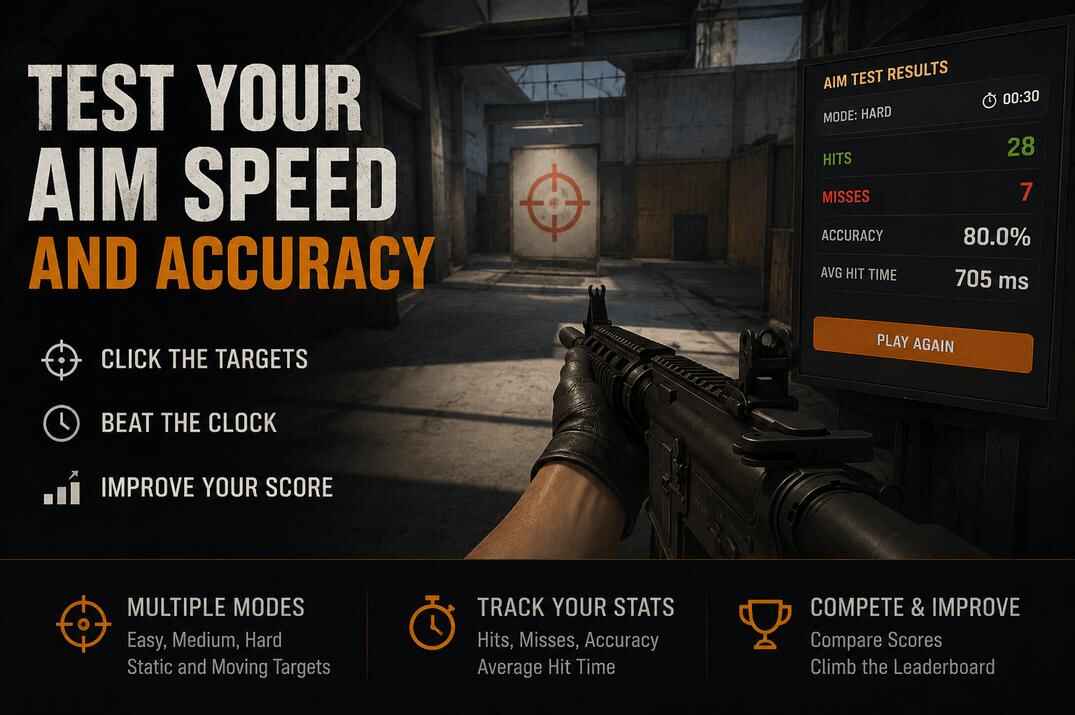
In a real duel the player with the faster reaction doesn't always win. Good crosshair placement means you barely need to move the mouse, and peeker's advantage often matters more than 20 ms. Use the reaction test as a warm-up and a baseline, not as a measure of skill. How quickly you get from seeing a target to hitting it is what the CS2 aim test checks.

Warm up

The first few clicks are almost always slower. Do 5 to 10 tries before you judge the number.

Sleep and focus

Tiredness costs more milliseconds than any setting. Test when you're fresh.

Same conditions

Same monitor, same mouse, same browser, other tabs closed. Then your progress is real.

More CS2 Tests and Tools

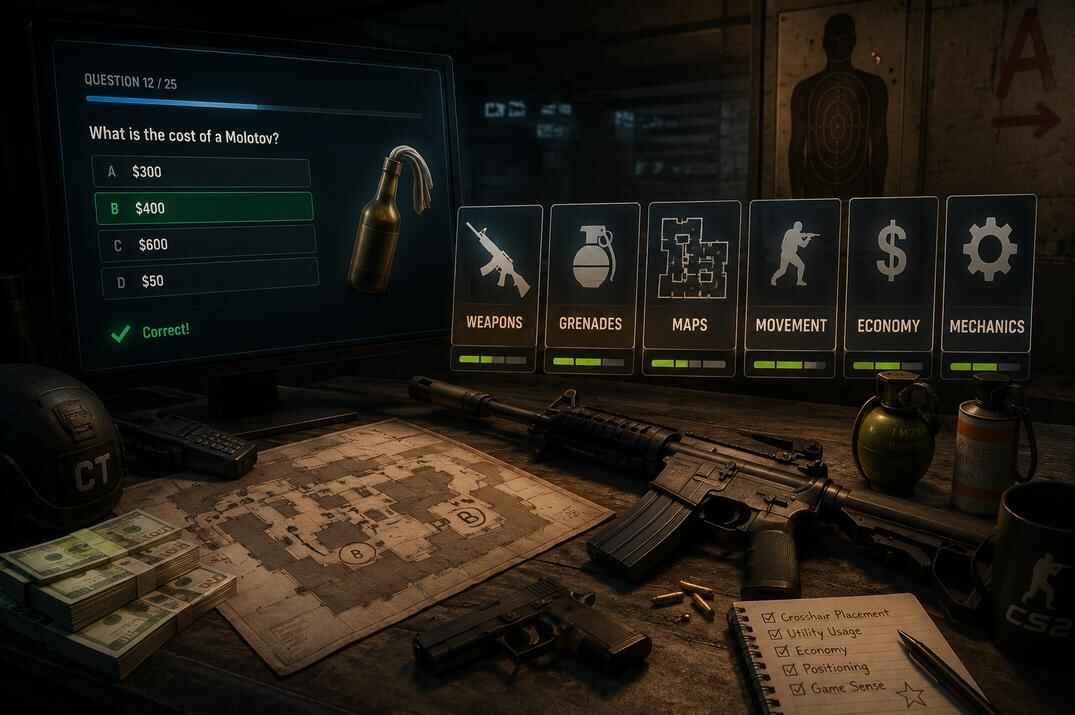
A fast reaction score is useful, but it's only one part of the picture. Next, check your aim and your game knowledge, and set up a clean crosshair and config for practice.
CS2 Reaction Test FAQ

What is a good reaction time for CS2?

Under 250 ms is good to great, under 200 ms is very fast. The typical result in simple visual tests is around 270 ms.

What is the average human reaction time?

On Human Benchmark, the largest online test of this kind, the median is about 273 ms.

Why do I get different results every time?

Attention, warm-up and tiredness change the number by tens of milliseconds. That's why Streak x5 and your average say more than one best click.

Does my monitor or mouse change the result?

Yes. Refresh rate, display lag, mouse polling rate and browser load are all part of the time you see. Compare results only on the same setup.

Is a result under 100 ms possible?

Not as a real reaction. Under 100 ms means you clicked before you actually saw the signal and the timing happened to match.

How does False Start mode work?

Five rounds, and about 3 signals in 10 come in the wrong color. Let them pass. Every click on a wrong signal adds 200 ms to your total, spread over the five rounds.

Should I test with or without sound?

For a clean visual result, turn the sound off. People react to sound a bit faster, and in CS2 you react to what you see much more often.

Can I improve my reaction time?

A little, with sleep, warm-up and regular practice. But in CS2 crosshair placement and game sense win more duels than a few milliseconds of reaction.

More CS2 Guides

Leave a Reply

Your email address will not be published. Required fields are marked *