History of the ESL Grand Slam
Since its launch, the Grand Slam has gone through different stages, reflecting both the evolution of Counter-Strike and the changes in tournament structure.

Origins in 2017 with Intel sponsorship
The Grand Slam was first introduced in 2017 under the banner of the Intel Grand Slam, a collaboration between ESL and Intel. The idea was simple but groundbreaking: instead of rewarding a single trophy, ESL wanted to crown the team that could dominate across multiple premier events. The prize - $1,000,000 in gold bars - immediately caught global attention and raised the stakes for every elite Counter-Strike lineup. From the very beginning, tournaments like IEM Katowice, IEM Cologne, and ESL Pro League became central battlegrounds for the race.
Evolution across CS:GO and transition to CS2
During the CS:GO era, the Grand Slam quickly established itself as the ultimate measure of consistency. Teams like Astralis and Team Liquid defined eras by completing their runs in record times, while Natus Vincere and FaZe Clan pushed the boundaries with unforgettable performances. When Counter-Strike 2 launched in 2023, the Grand Slam seamlessly transitioned into the new title. ESL adjusted the rules to ensure that the same principle - rewarding long-term excellence - remained intact. This made the Grand Slam not just a carryover from CS:GO, but a living tradition that continues to evolve with the game.
Rebranding in 2025: Intel out, ESL Grand Slam continues
In 2025, a major shift occurred: Intel ended its role as the title sponsor. The competition was officially renamed the ESL Grand Slam, but the format, prestige, and $1,000,000 prize remained unchanged. ESL confirmed that the Grand Slam would continue beyond Season V and into Season VI, proving that the achievement had grown beyond a sponsor’s name. The rebranding marked a new era - no longer tied to a single corporate partner, the ESL Grand Slam now stands purely as a symbol of dominance in Counter-Strike.
ESL Grand Slam Rules Explained
The ESL Grand Slam may sound straightforward, but its rules are carefully designed to reward consistency, endurance, and true dominance on the biggest stages of Counter-Strike 2. Here’s a breakdown of how it works today:
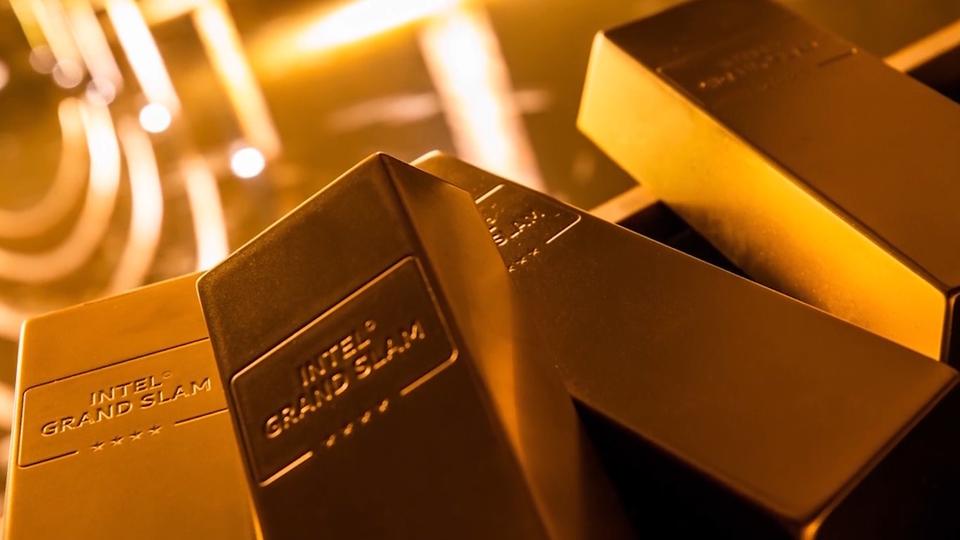
How teams qualify (4 event wins within 10 attempts)
To secure the Grand Slam, a team must win three ESL Pro Tour Masters events and one ESL Championship event (Katowice, Cologne, or an ESL-operated Major) within a span of ten consecutive eligible tournaments. This format prevents a lucky streak at small events and ensures that only teams capable of performing at the highest level over a long period can reach the finish line.
Masters vs Championship events (Katowice, Cologne, Majors)
Not every tournament counts toward the Grand Slam. ESL distinguishes between: Masters events - such as IEM Dallas, IEM Melbourne, or ESL Pro League. Championship events - the crown jewels of the ESL Pro Tour: IEM Katowice, IEM Cologne, and ESL-operated Majors.
A valid Grand Slam run requires at least one Championship win, so teams must prove themselves on Counter-Strike’s most iconic stages.
Core roster requirement (minimum 3 players across all wins)
Roster changes are common in modern esports, but the Grand Slam rules enforce continuity. A core of at least three players must be part of the roster in all four winning tournaments. This rule stops organizations from claiming the award through constant lineup shuffles and keeps the achievement tied to the actual roster that did the winning.
Giant Killer Bonus ($100,000 explained)
The Grand Slam isn’t only about the frontrunners. ESL introduced the Giant Killer Bonus - a $100,000 reward given to any team that defeats a Grand Slam contender in the decisive final, preventing them from closing their run. If the spoiling team itself completes the Grand Slam in that same final, the bonus does not apply. This twist keeps every final tense: underdogs have not only pride on the line but also a significant payday.
Updates in Season VI (2025)
With the transition to Season VI, ESL reaffirmed the same structure but refreshed the calendar of eligible events. The Grand Slam race will now include IEM Dallas 2025 as the kickoff, alongside future stops in Cologne, Katowice, and Pro League. ESL also clarified the roster rules to prevent disputes, making it clear that the "three-player core" must compete in every winning lineup without exception.
All ESL Grand Slam Winners
Only five teams in history have managed to conquer the ESL Grand Slam. Each victory not only brought home $1,000,000 but also defined an era in Counter-Strike esports.
Astralis (Season I, December 2018)
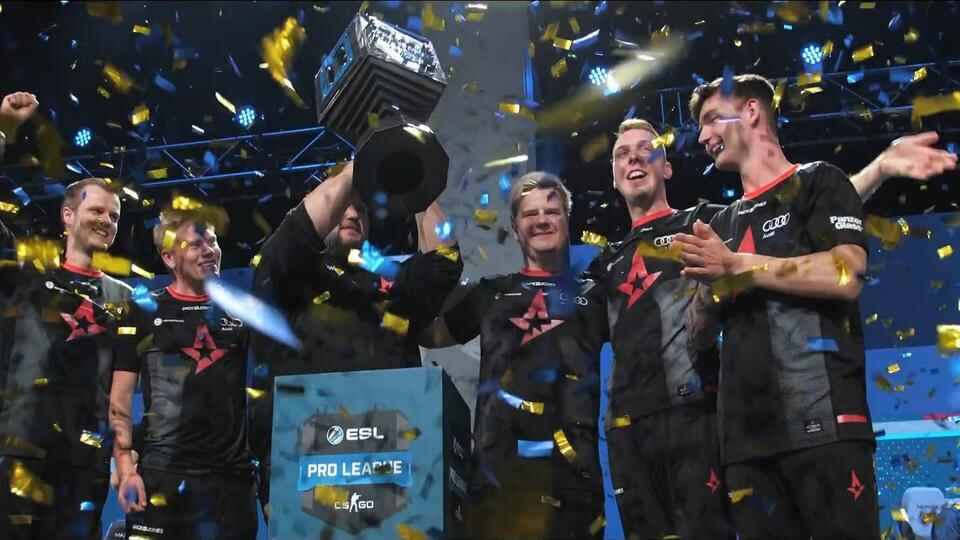
Duration: 235 Days
Players: gla1ve, dev1ce, dupreeh, Magisk, Xyp9x
Tournaments Won: DreamHack Masters Marseille 2018, ESL Pro League Season 7, IEM
Chicago, ESL Pro League Season 8
The Danish powerhouse Astralis became the very first Grand Slam champions, setting the standard for tactical discipline and utility usage. Led by gla1ve, the team revolutionized Counter-Strike with methodical executes and unmatched teamwork. Their 235-day run included wins at Marseille, EPL S7, IEM Chicago, and EPL S8 - an era that changed how the game was played.
Team Liquid (Season II, July 2019)
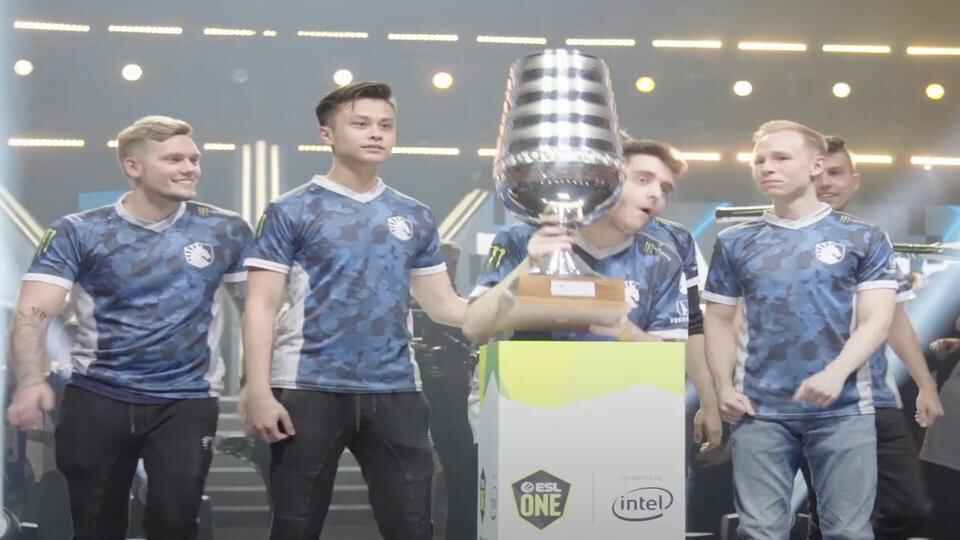
Duration: 63 Days
Players: nitr0, Stewie2K, Twistzz, EliGE, NAF
Tournaments Won: IEM Sydney, DreamHack Masters Dallas, ESL Pro League Season 9, ESL
One Cologne
North America’s golden moment came with Team Liquid, who stormed through 2019 to complete the Grand Slam in just 63 days - the fastest in history. Powered by EliGE, NAF, Twistzz, nitr0, and Stewie2K, Liquid dominated with raw firepower and momentum, delivering an achievement unmatched in speed.
Natus Vincere (Season III, September 2021)
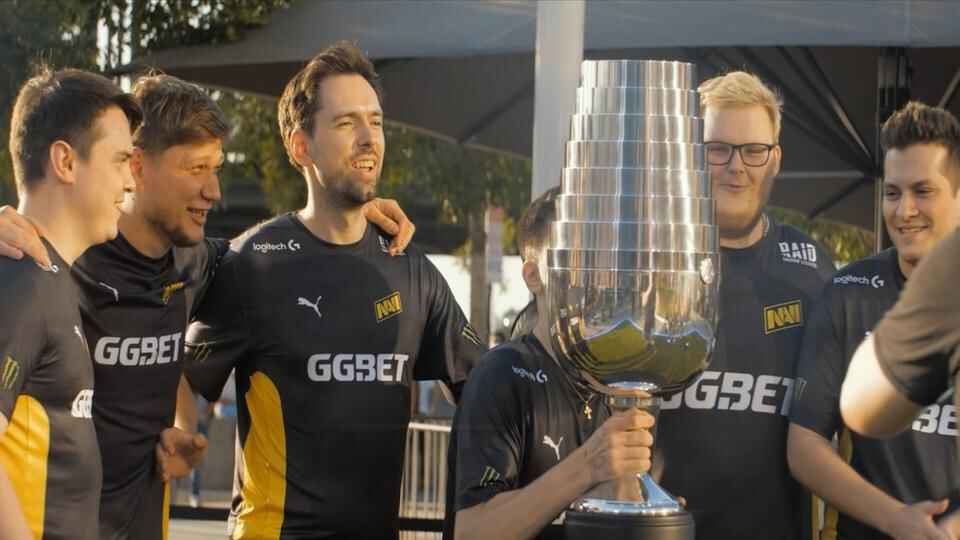
Duration: 566 Days
Players: s1mple, b1t, electroNic, Perfecto, Boombl4, flamie
Tournaments Won: IEM XIV, DreamHack Masters Spring 2021, IEM XVI Cologne, ESL Pro
League Season 14
The NAVI roster of 2021 - featuring s1mple at the peak of his powers - carved out a legendary run. Over 566 days, they claimed IEM XIV, DH Masters Spring, IEM Cologne, and EPL S14. Despite pandemic disruptions, NAVI cemented their place in history, proving patience and resilience could conquer the Grand Slam.
FaZe Clan (Season IV, March 2023)

Duration: 404 Days
Players: karrigan, Twistzz, ropz, rain, broky
Tournaments Won: IEM Katowice, ESL Pro League Season 15, IEM Cologne, ESL Pro League
Season 17
In 2023, FaZe Clan became the fourth team to lift the trophy. Guided by karrigan’s leadership and fueled by Twistzz, ropz, rain, and broky, FaZe battled through ups and downs but delivered when it mattered most. Their journey - from Katowice to EPL S17 - showcased adaptability and perseverance across different metas.
Team Vitality (Season V, 2025)

Duration: Ongoing until 2025
Players: ZywOo, apEX, flameZ, Spinx, Mezii
Tournaments Won: IEM Cologne 2024, IEM Katowice 2025, ESL Pro League Season 21, IEM
Melbourne 2025
Most recently, Team Vitality closed out Season V with a historic run that spanned CS:GO’s final days and the rise of CS2. Anchored by ZywOo’s brilliance and a balanced roster, they claimed Cologne 2024, Katowice 2025, EPL S21, and Melbourne 2025. Vitality’s triumph not only brought them the million-dollar prize but also marked the first Grand Slam completed in the CS2 era.
F.A.Q.

What is the ESL Grand Slam in CS2?
The ESL Grand Slam is a $1,000,000 prize awarded to the first Counter-Strike 2 team that wins four eligible ESL Pro Tour tournaments within ten consecutive events. It represents the highest standard of consistency and dominance in the game.
How many tournaments do you need to win?
A team must win four events within a span of ten consecutive eligible tournaments. At least one of those wins must be a Championship event such as IEM Katowice, IEM Cologne, or an ESL-operated Major.
What are ESL Championship events?
Championship events are the crown jewels of the ESL Pro Tour. They include IEM Katowice, IEM Cologne, and ESL Majors. Winning at least one of these is mandatory to complete the Grand Slam.
What is the Giant Killer bonus?
The Giant Killer bonus is a $100,000 reward given to any team that defeats a Grand Slam contender in the final match that would have secured their fourth and decisive win. It adds extra stakes for underdogs and more drama to the race.
Who are the past winners?
Only five teams have ever completed the Grand Slam: Astralis (2018), Team Liquid (2019), Natus Vincere (2021), FaZe Clan (2023), and Team Vitality (2025).
Can a player win more than once with different teams?
Yes. Russel "Twistzz" Van Dulken is the only player to date who has won two Grand Slams – first with Team Liquid in 2019 and later with FaZe Clan in 2023.