Counter-Strike 2 Weapons: Stats, Damage & Economy

Table of Contents

CS2 Weapons Overview

Everything you need to start mastering CS2 weapon mechanics

Counter-Strike 2 weapons haven’t changed their names, types, or core stats - but they don’t feel identical to CS:GO anymore. Shooting feels cleaner. Mistakes get punished faster. And forcing a bad buy hurts more than it used to. In CS2, weapon choice is tightly connected to economy, positioning, and timing - not just aim.

This page is built as a practical guide to CS2 weapons. Here you’ll find how damage really works, how armor changes gunfights, how recoil behaves in real duels, and why certain guns are stronger in specific rounds. Each weapon listed below links to its own detailed guide with recoil patterns, usage scenarios, clear breakdowns, and complete CS2 weapon stats.

From experience, shooting is the first skill players improve quickly. Here’s a simple CS2 tip: most rifles kick almost straight up for the first 5-6 bullets. With just a day or two of focused mouse control practice, you can make those first shots land consistently. That alone wins more fights than people expect.

But if you want to improve faster, weapon decisions matter just as much as mechanics.

Knowing when to pick an SMG instead of a rifle, when a Deagle makes sense, when to buy armor first, or when to save instead of forcing often decides rounds before the first bullet is even fired.

What’s New in CS2 Weapons

In Counter-Strike 2, weapons have received some upgrades - new physics, improved sounds, interaction of smoke with weapons, better spray control, and more accurate hit registration. However, beneath all the visual and technical enhancements, the core gameplay remains unchanged: precise aim, smart economy management, and tactical teamwork.

Source 2 Engine. Improved physics, bullet tracing, and cleaner hit registration. Shooting feels smoother, especially at long range.

Updated Animations & Sounds. Shots now sound heavier and more distinct. Weapon animations are quicker and more responsive - which affects not just feel, but combat timing.

New Spray & Recoil. Spray patterns have slightly changed. They feel more natural, but also less predictable - especially when holding down the trigger.

Smoke Grenades. Smokes are now volumetric objects. You can push them with HE grenades or shoot through them. This opens up new strategies and redefines what "cover" really means.

UI & Visual Aids. Expanded customization for crosshairs, HUD, hit indicators - you can now tailor everything to your playstyle.

Damage, Armor & Hitboxes in CS2

Understanding how damage works in CS2 is the difference between lucky frags and consistent kills. Every bullet follows its own logic - multipliers, armor penetration, damage absorption. If you don’t know where to shoot, you’ll waste ammo, money, and rounds.

You need to know what damage multipliers are and which body parts are worth aiming at. You also need to understand how armor works - both in terms of survival and how it affects your buy decisions. And finally, it helps to learn how hitboxes function in CS2, and how they differ from what you may be used to in CS:GO.

These things shape every gunfight. The more you understand them, the quicker you'll start winning them.

How Damage Works in CS2

Each weapon in CS2 has a base damage value, and that number is multiplied depending on where the bullet hits.

Here’s how the damage multipliers work:

  • Head - x4
  • Chest / Arms - x1
  • Stomach - x1.25
  • Legs - x0.75

For example, the AK-47 deals 36 base damage. A headshot: 36 × 4 = 144 - a guaranteed HS kill. How about a chest shot? Just 36 damage - and way less effective against armor.

But there’s more to it than just hitboxes. Every weapon also has:

  • Armor Penetration / Arms - how much damage goes through armor (AK-47 has ~77.5%)
  • Damage Falloff - damage drops off over distance (especially for pistols and shotguns)
  • Rate of Fire (or RoF) - higher fire rate means more potential damage per second (or DPS)

You also need to factor in shot placement. In CS2, hit registration is more precise - but that also means your spray might land in the shoulder instead of the head, even if your crosshair looks perfect.

The better you understand how your weapon deals damage, the easier it gets to plan your fights - how many bullets you’ll need, where to aim, and whether you should even take the duel.

Armor Types

CS2 has two kinds of armor - just Kevlar, or Kevlar with a helmet. Kevlar protects your chest and stomach from bullets and helps reduce aim punch when you're getting shot. If you add a helmet, you also get protection for the head against most weapons.

Here’s what actually matters:

  • Armor reduces incoming damage by absorbing part of it.
  • If a bullet doesn’t break through your armor, you’ll survive - but you’ll lose "armor HP".
  • Without a helmet, even a cheap weapon can one-shot you with a headshot.
A single $350 helmet can be the difference between winning or getting deleted in half a second.

Hitboxes

Hitboxes are invisible areas on a player model where your shots are registered. In CS2, the head hitbox is slightly larger than in CS:GO - approximately 6-20% bigger, depending on the model comparison.

This increase applies only to the invisible collision hitbox of the head, not to the visible player model itself. The character’s head does not visually appear larger - the adjustment exists purely in the underlying hit registration system.

This may be one of the reasons why headshot percentages tend to be higher in CS2 compared to CS:GO. As the saying goes, statistics don’t lie - people do.

Each part of the body has its own damage scaling.

The head is the smallest hitbox on the model, but it’s also the most valuable, applying a 4x damage multiplier that can instantly end a fight. The chest and arms receive standard damage - no bonus, no penalty - and are usually the easiest areas to connect with during a spray. The stomach carries a slight damage bonus, which is why players often aim there when a clean headshot isn’t realistic. The legs, on the other hand, apply reduced damage and are generally the least effective target unless they’re the only part of the model exposed.

A few important things to keep in mind:

  • All player models share the same hitbox structure, but animations can throw off your aim.
  • Hit registration in CS2 feels tighter, especially against moving targets - so timing matters even more.
  • Hitting a shoulder or thigh can allow your opponent to survive, especially if they have armor.
  • From higher or lower ground, landing headshots becomes harder because vertical angles reduce the effective visible area.
Aim for the upper chest. It gives you a better chance to land a headshot through recoil and is more forgiving when your opponent is moving

Weapon Economy

In CS2, it’s not always the player with the biggest gun who wins - it’s the one who understands money.

You never have enough cash for everything. Every buy is a trade-off between firepower and utility, between this round and the next one. A rifle without armor or grenades can be weaker than a cheaper weapon with a full setup.

Buying a weapon isn’t about picking your favorite gun. It reflects your role, your team’s economy, and the plan for the round. A bad force buy can break two or three rounds in a row. A disciplined save can set up a strong full buy with rifles, armor, and utility.

Sometimes an SMG after a pistol win is the correct choice to secure bonus money. Sometimes a Deagle or a Galil keeps you competitive without destroying the team’s balance. And sometimes the smartest decision is not to buy at all.

The goal isn’t to buy the strongest gun every round. The goal is to buy the strongest setup your team can afford together.

Understanding economy means knowing when to save, when to half-buy, when to force, and when to commit to a full buy with proper utility.

Buy Priorities (Eco, Force, Full Buy)

Every round in CS2 may fall into one of three buy types: eco, force, or full buy.

An eco round means saving as much money as possible to secure a strong purchase in the following round. The goal isn’t to win through "hero" plays, but rather to damage the enemy economy or steal a weapon if the opportunity appears. A force buy, on the other hand, is a calculated risk - you invest enough to stay competitive now, even if it means putting the next round in danger. A full buy represents the ideal scenario: rifles, full armor (including a helmet where necessary), and proper utility to execute or defend with structure and confidence.

You can't buy everything in CS2. As much as you'd love an AWP, full nades, and a defuse kit every round - that’s just not how the game works. A smart buy is always about balance: your role, your team’s money, and what you need to win this round.

Armor comes first in most cases. Without it, you die faster and lose even fair fights. The only real exception is if you’re picking up an AWP and know how to use it. In that case, the gun itself might come first - but it’s situational.

Next is choosing the right weapon for your role and position.

  • If you need to rush, go with an AK-47 / M4A1-S, a cheaper Galil / Famas, or even a MAC-10.
  • If you're in the narrow streets of Italy, the Nova and XM1014 can be very effective.
  • If you're a sniper, an AWP or Scout makes sense - but only if you know how to use them. And since an AWP gives you essentially one strong shot, a TEC-9 or Deagle as a backup can be crucial.

Then comes utility. If you’re not sure what to buy, a simple rule of thumb is: Flash > Smoke > Molotov > HE - in that order, for most situations.

And don’t forget the defuse kit. If you're on CT, at least one teammate needs to have it. No kit means five extra seconds that can easily cost you the round.

Weapon Types in CS2

Pistols

Pistols are the starting weapons in CS2 and are most commonly used during pistol rounds, eco rounds, or as backups for snipers. They are inexpensive but can still be deadly with accurate aim and good positioning.

In the right hands, pistols are not just sidearms - they can win full rifle rounds, especially when used at close range or in fast trades.
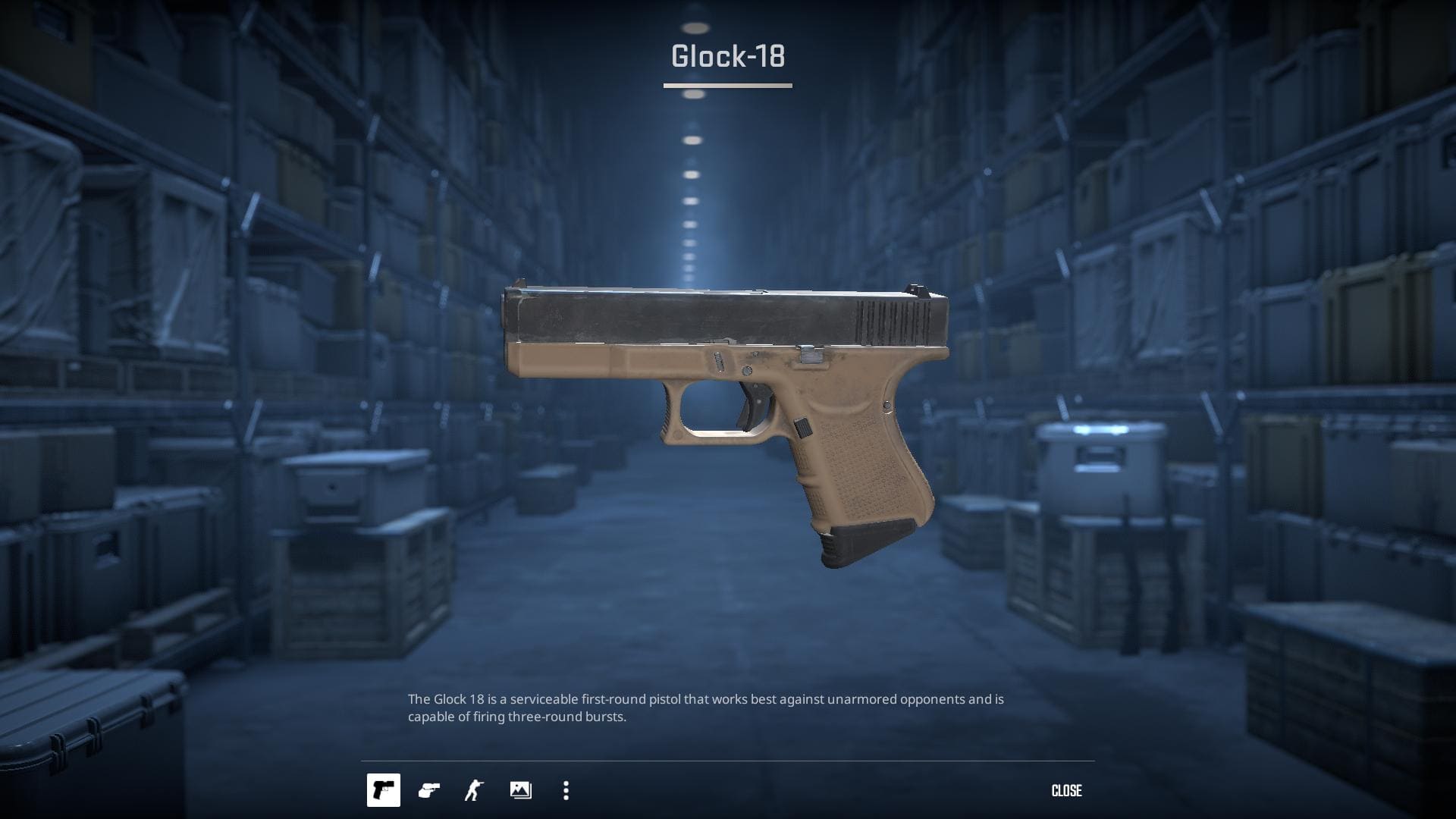
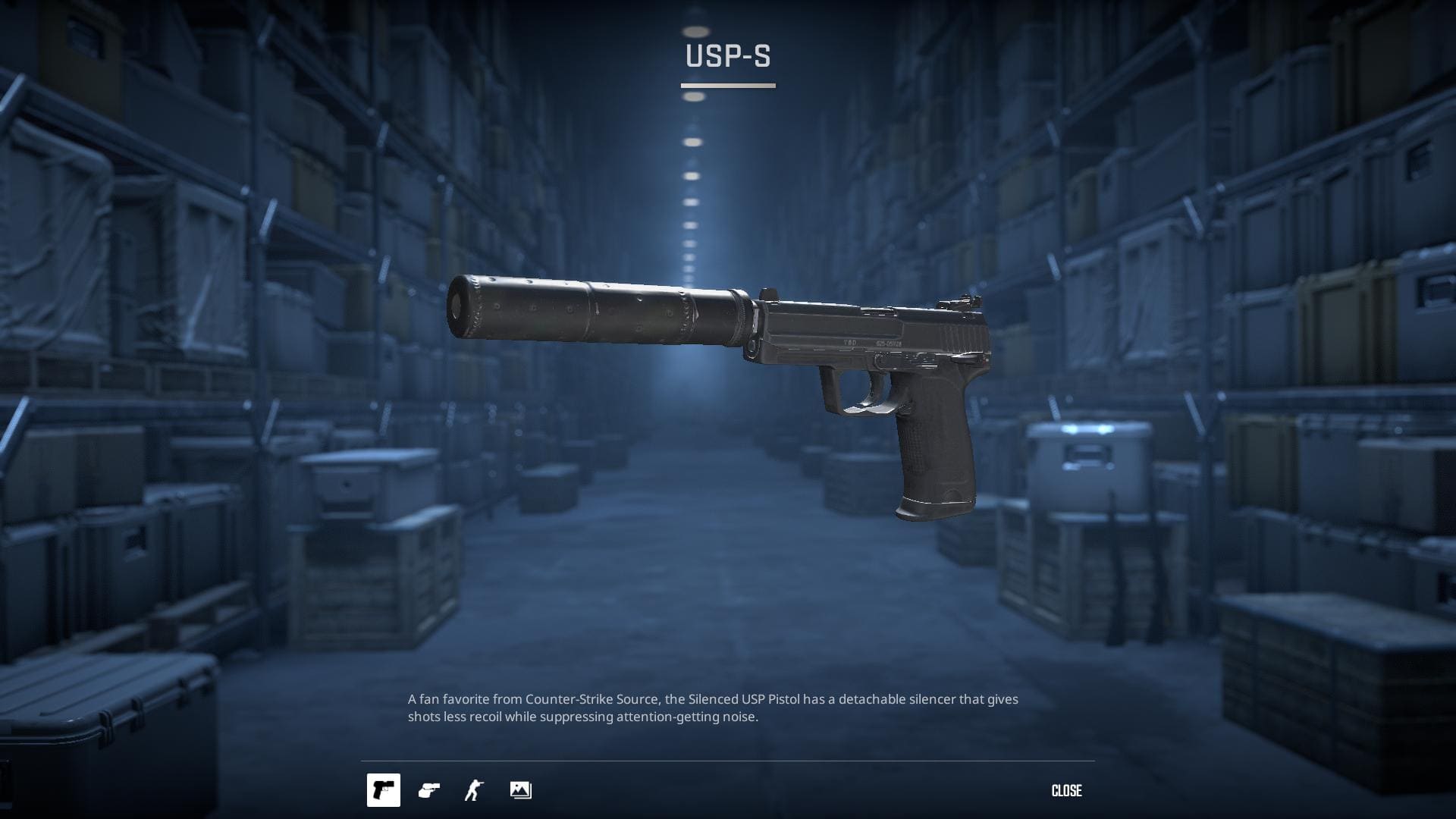
Image of the default Glock-18 pistol skin in Counter-Strike 2

Glock-18

Default T pistol. Fast, burst-capable, weak but deadly up close.

View Guide
Image of the default USP-S pistol skin in Counter-Strike 2

USP-S

Silenced CT pistol. Precise, stealthy, great for clean headshots.

View Guide
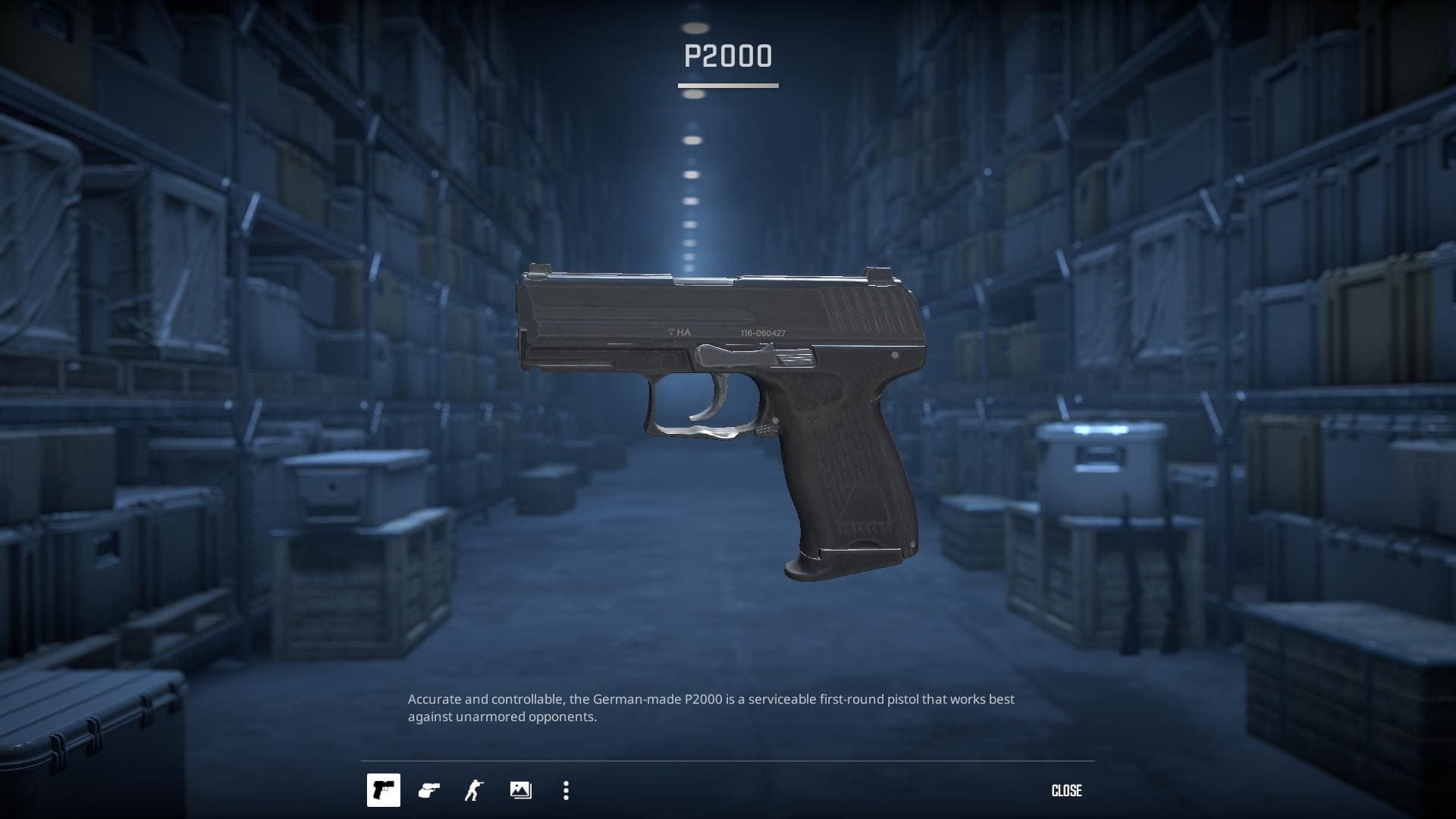
Image of the default P2000 pistol skin in Counter-Strike 2

P2000

Balanced CT pistol. More bullets than USP-S, solid overall pick.

View Guide
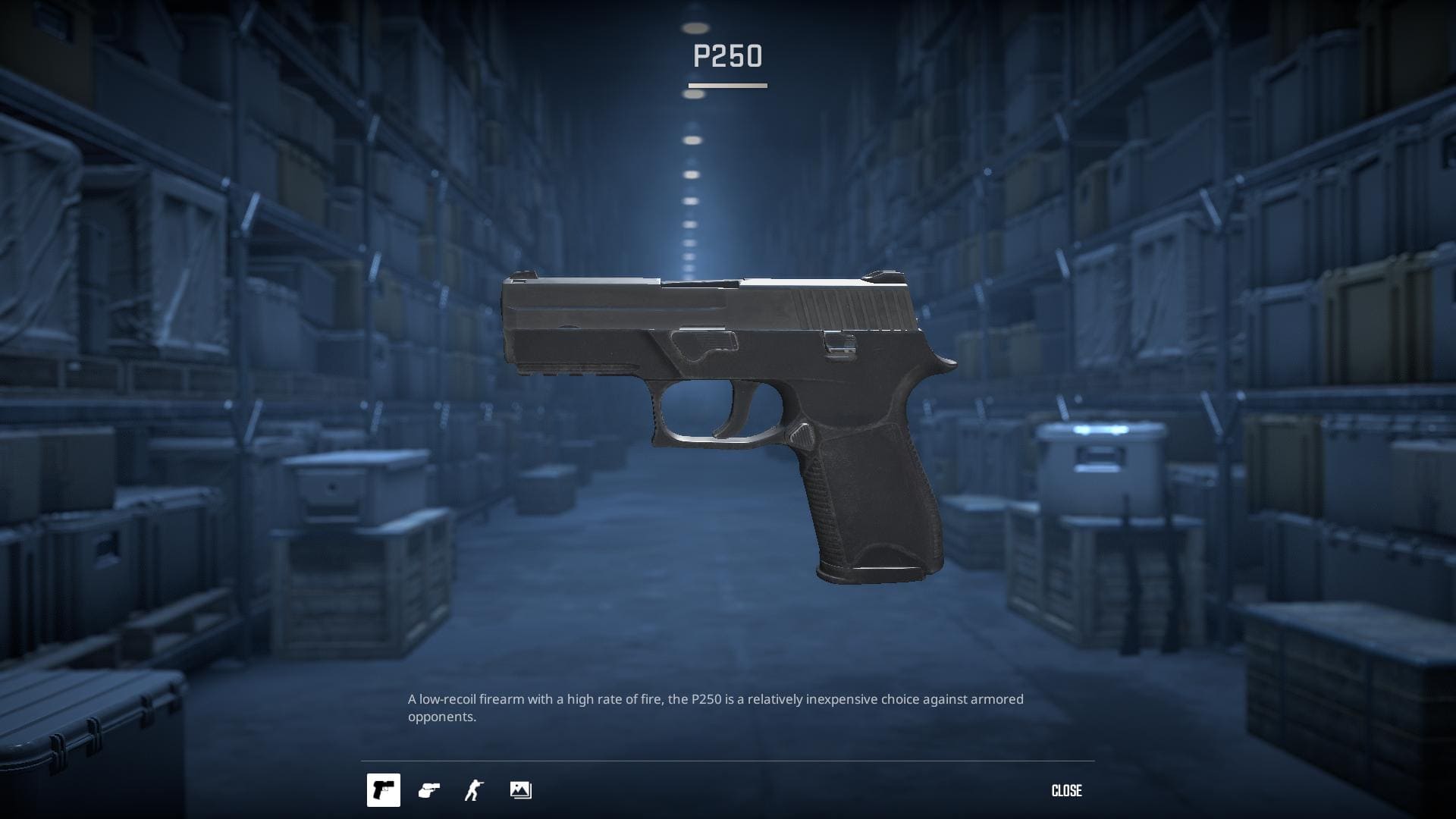
Image of the default P250 pistol skin in Counter-Strike 2

P250

Cheap and fast. Good damage, low recoil – great force buy pistol.

View Guide
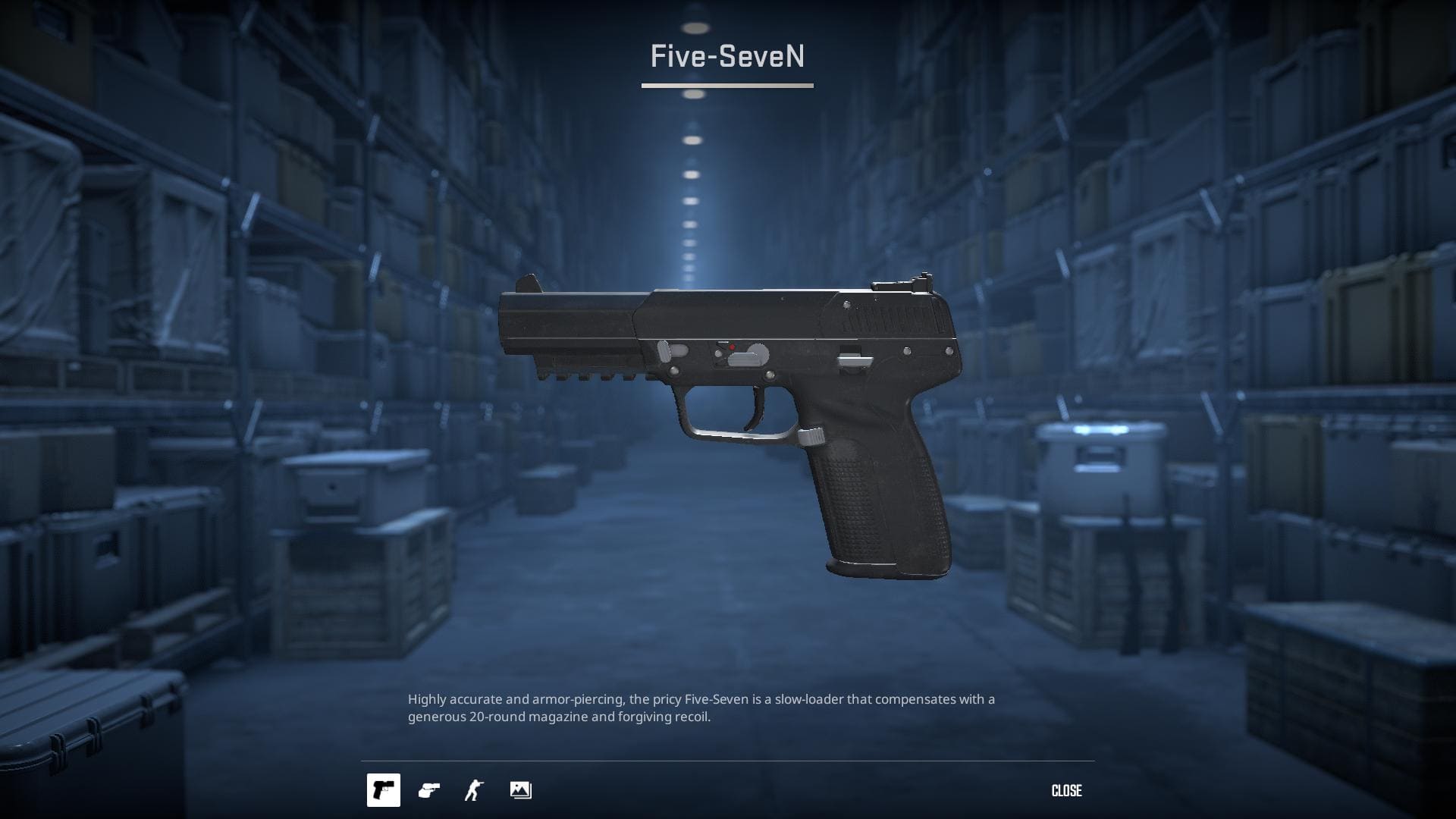
Image of the default Five-SeveN pistol skin in Counter-Strike 2

Five-SeveN

CT-only. High armor penetration, 20 bullets, deadly on force buys.

View Guide
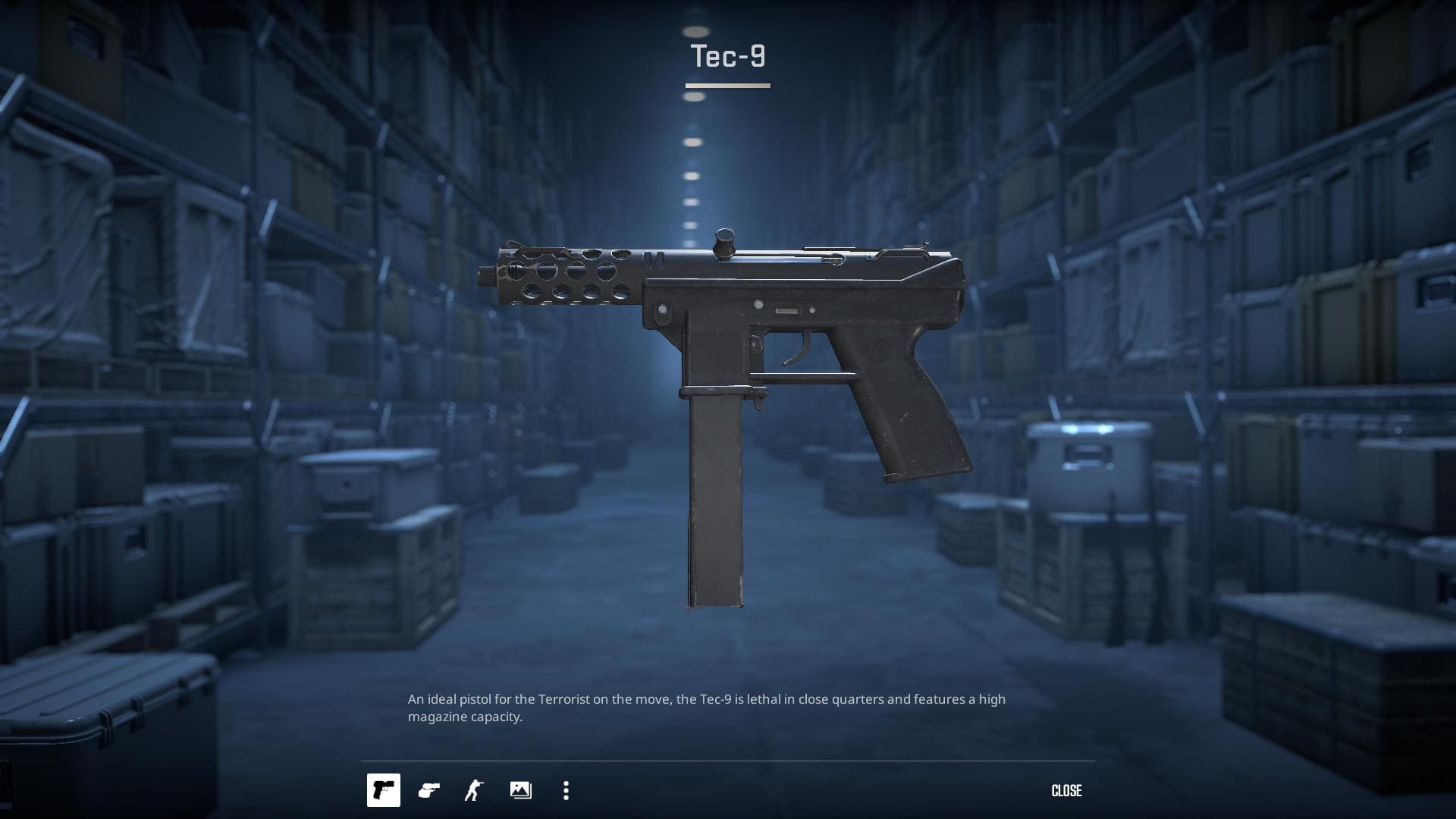
Image of the default Tec-9 pistol skin in Counter-Strike 2

Tec-9

T-only. Deadly at close range, high spread – needs control.

View Guide
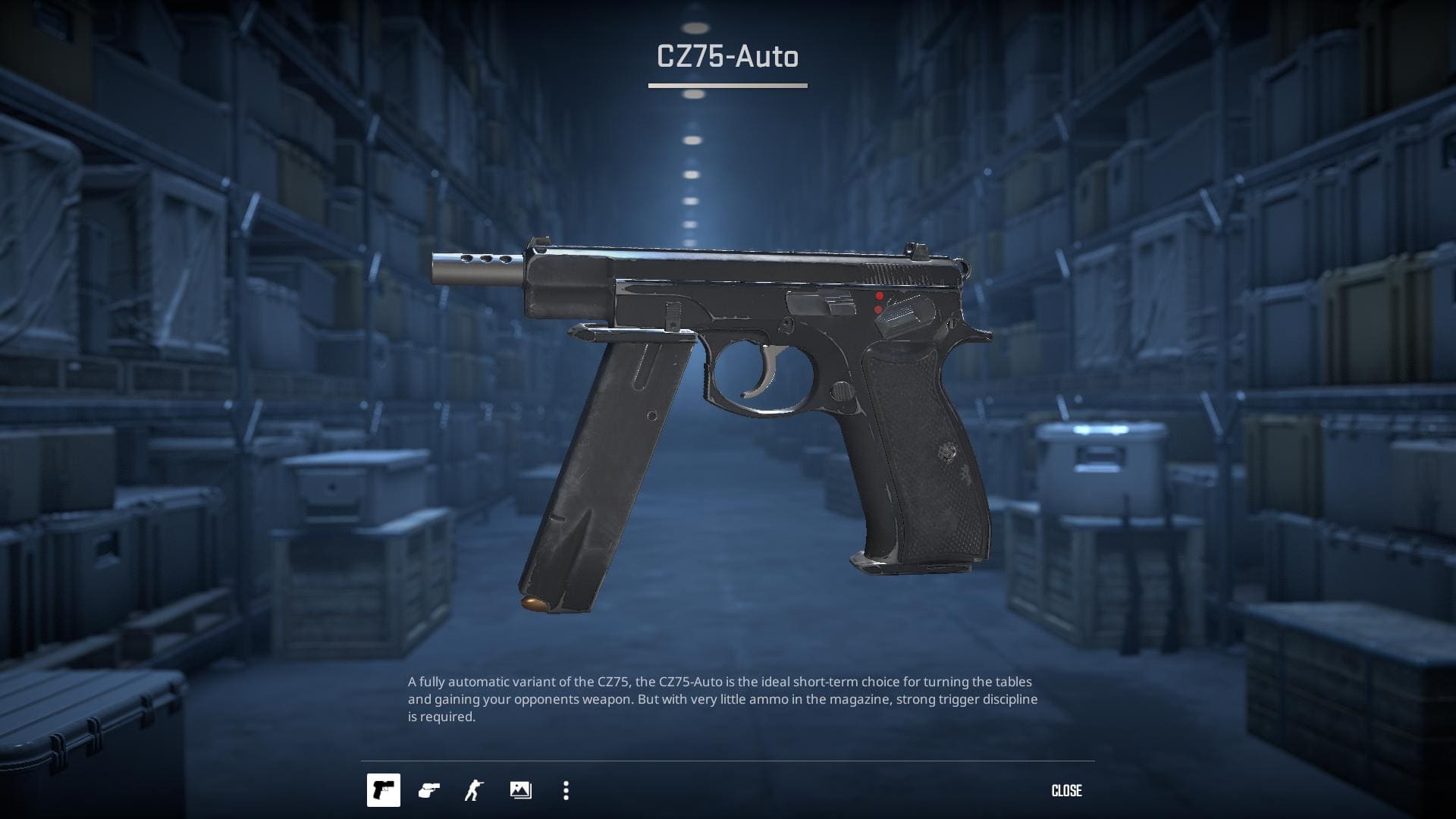
Image of the default CZ75-Auto pistol skin in Counter-Strike 2

CZ75-Auto

Auto pistol. Low ammo, fast reload. Great for surprise bursts.

View Guide
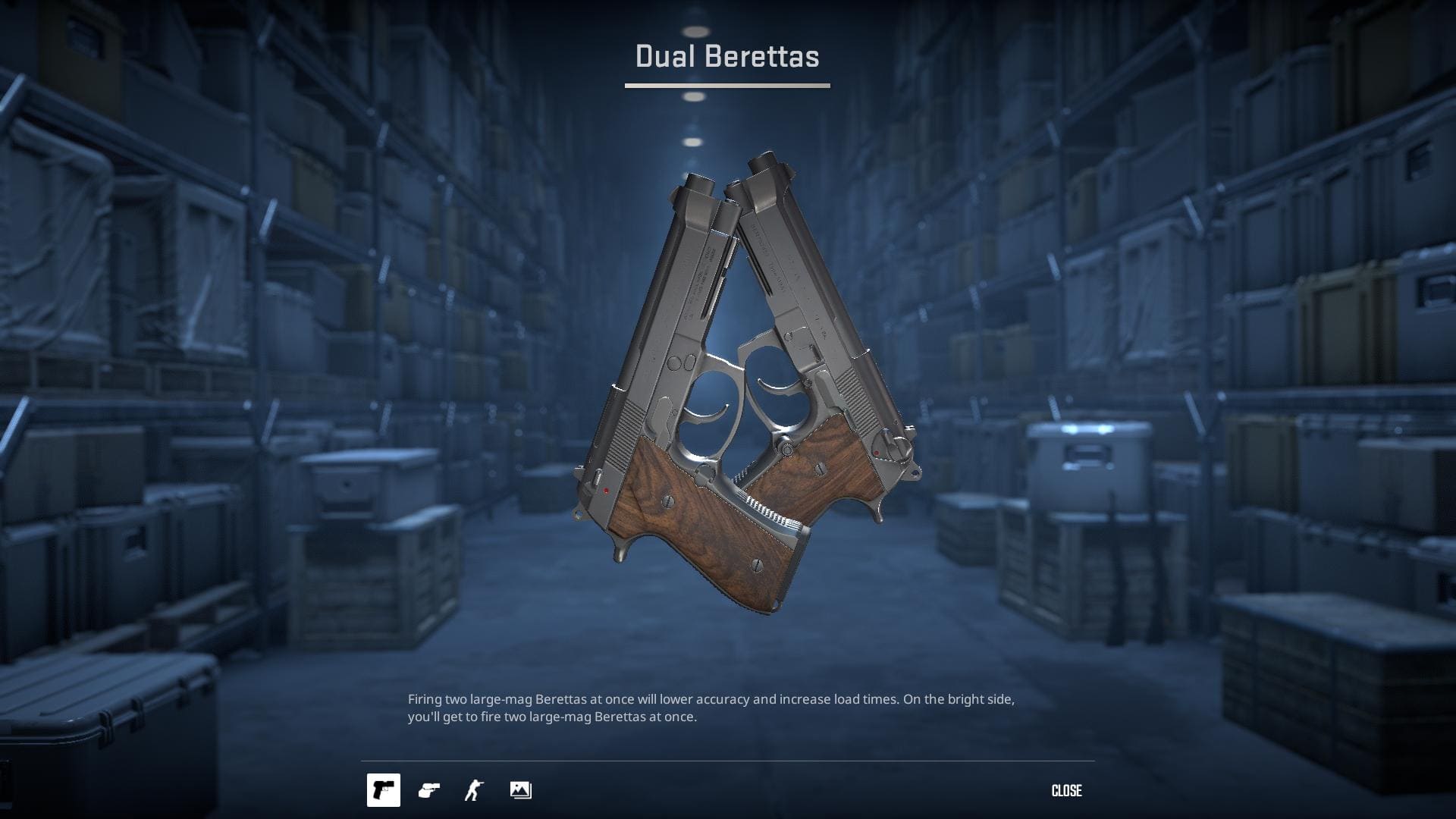
Image of the default Dual Berettas pistol skin in Counter-Strike 2

Dual Berettas

Buffed in CS2. Decent accuracy, fun and viable on pistol rounds.

View Guide
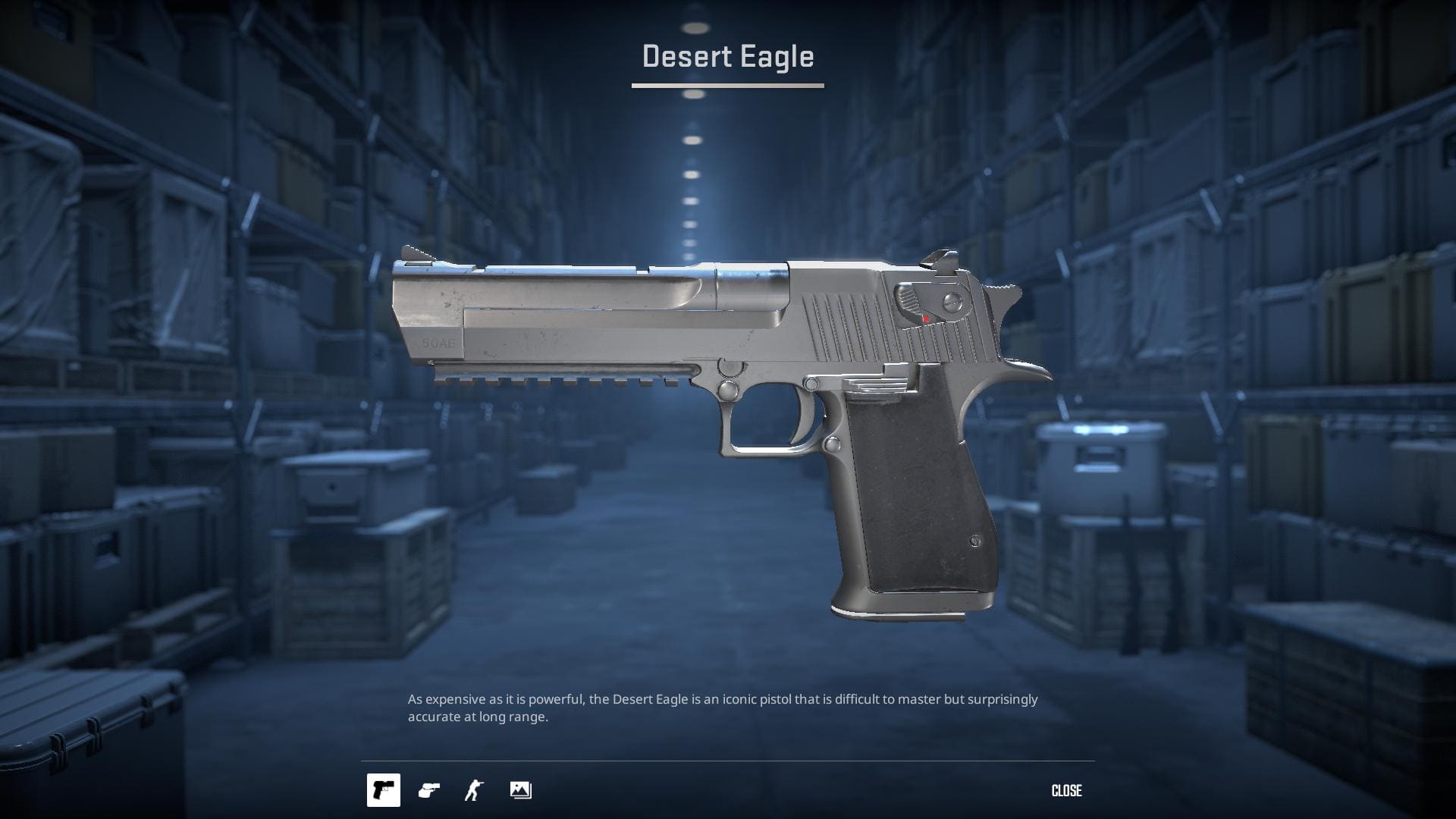
Image of the default Desert Eagle pistol skin in Counter-Strike 2

Desert Eagle

One-shot headshot. High risk, high reward. Demands aim control.

View Guide
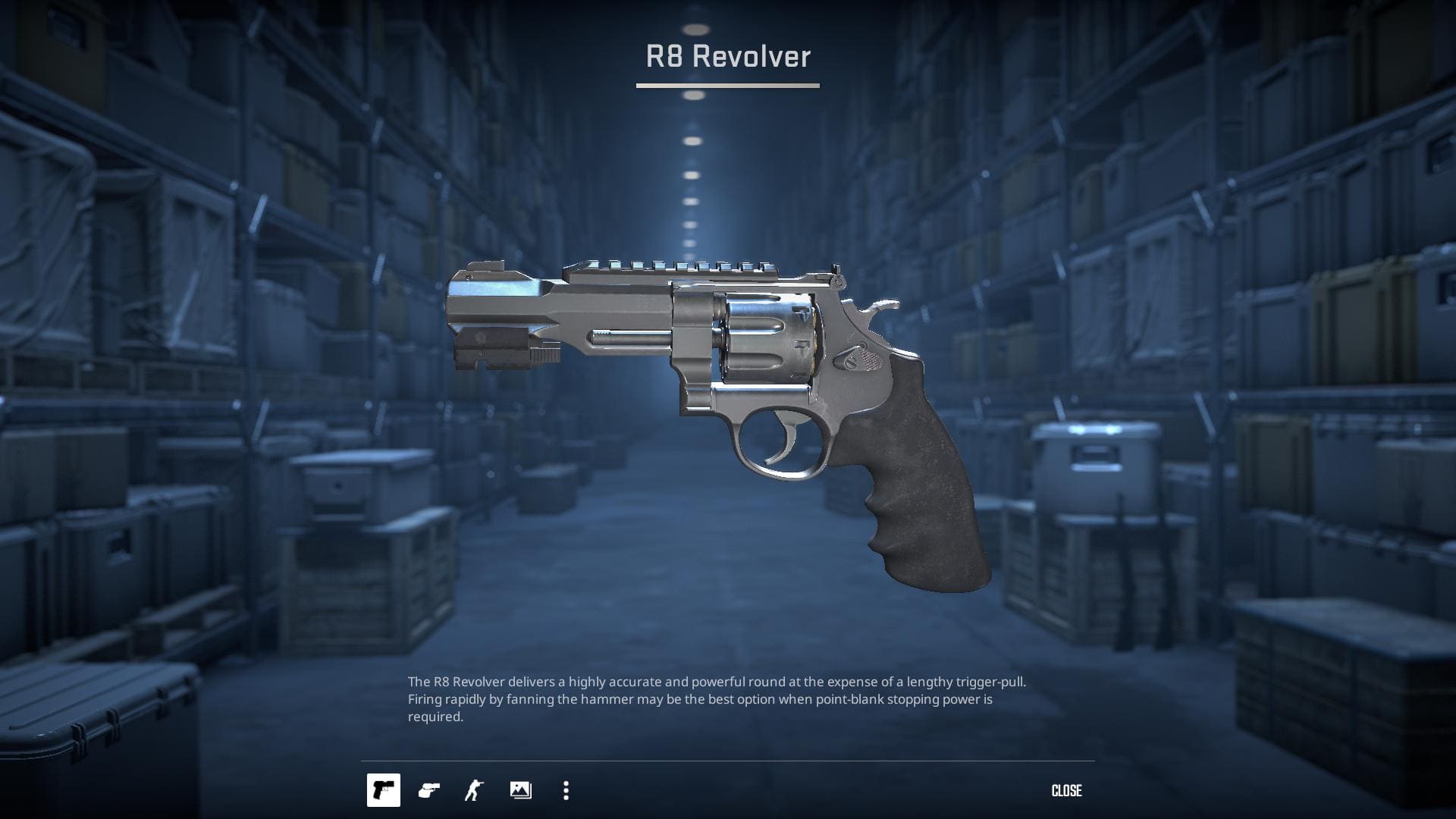
Image of the default R8 Revolver pistol skin in Counter-Strike 2

R8 Revolver

Slow but powerful. Niche pick. Can one-shot but timing is key.

View Guide

Submachine Guns (SMGs)

Submachine guns are a strong choice when you want to save money but stay competitive. They’re light, fast, and inexpensive - and they offer a 300% kill reward, significantly higher than rifles.

SMGs are especially effective against unarmored opponents. They’re ideal for building money after winning pistol rounds and work well in close-quarters fights or tight angles.
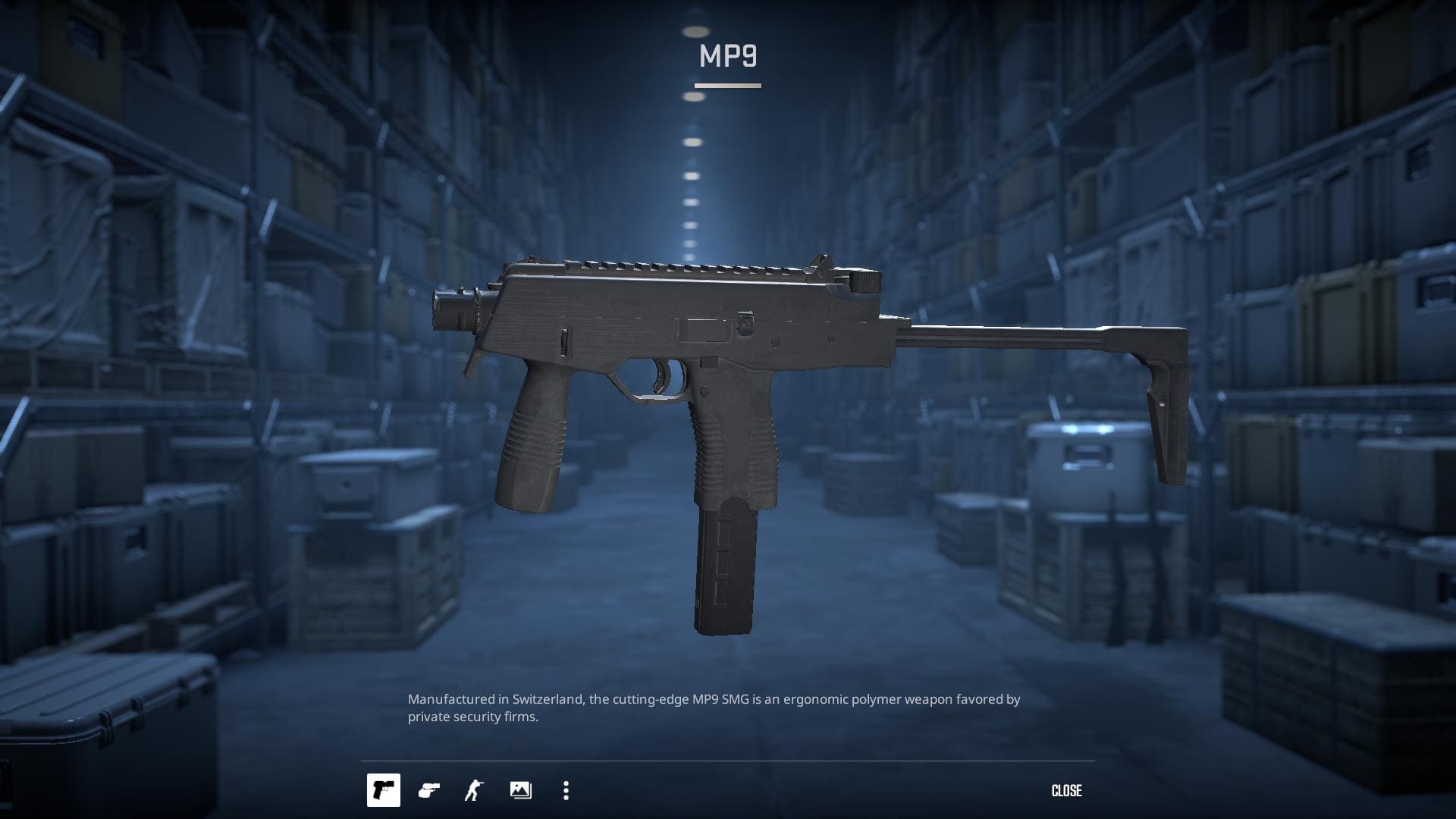
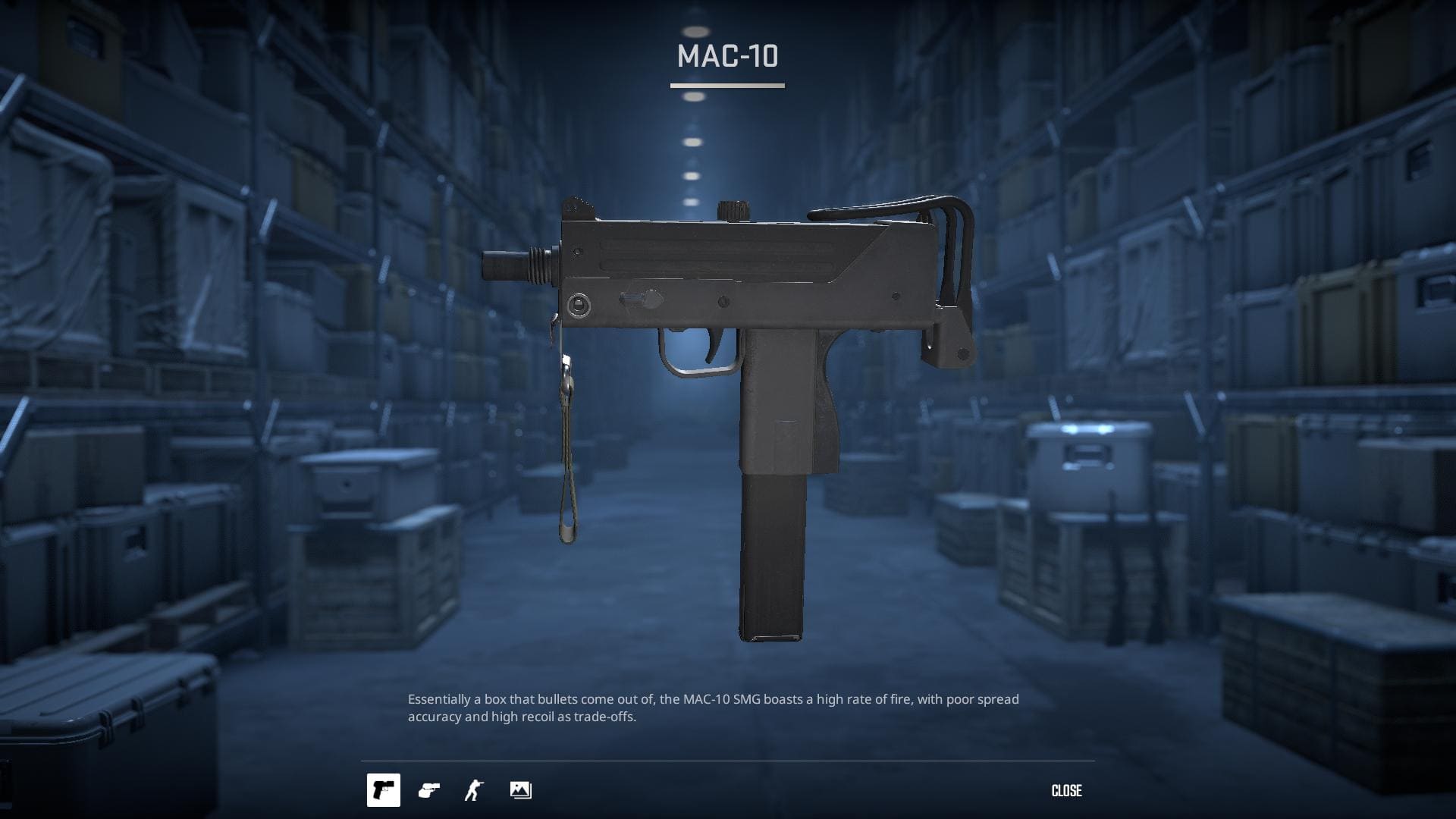
Image of the default MP9 submachine gun skin in Counter-Strike 2.

MP9

Fast, accurate, and cheap. A CT favorite that almost always pays for itself.

View Guide
Image of the default MAC-10 submachine gun skin in Counter-Strike 2.

MAC-10

T-side version of the MP9. Wild recoil but great for close-range rushes.

View Guide
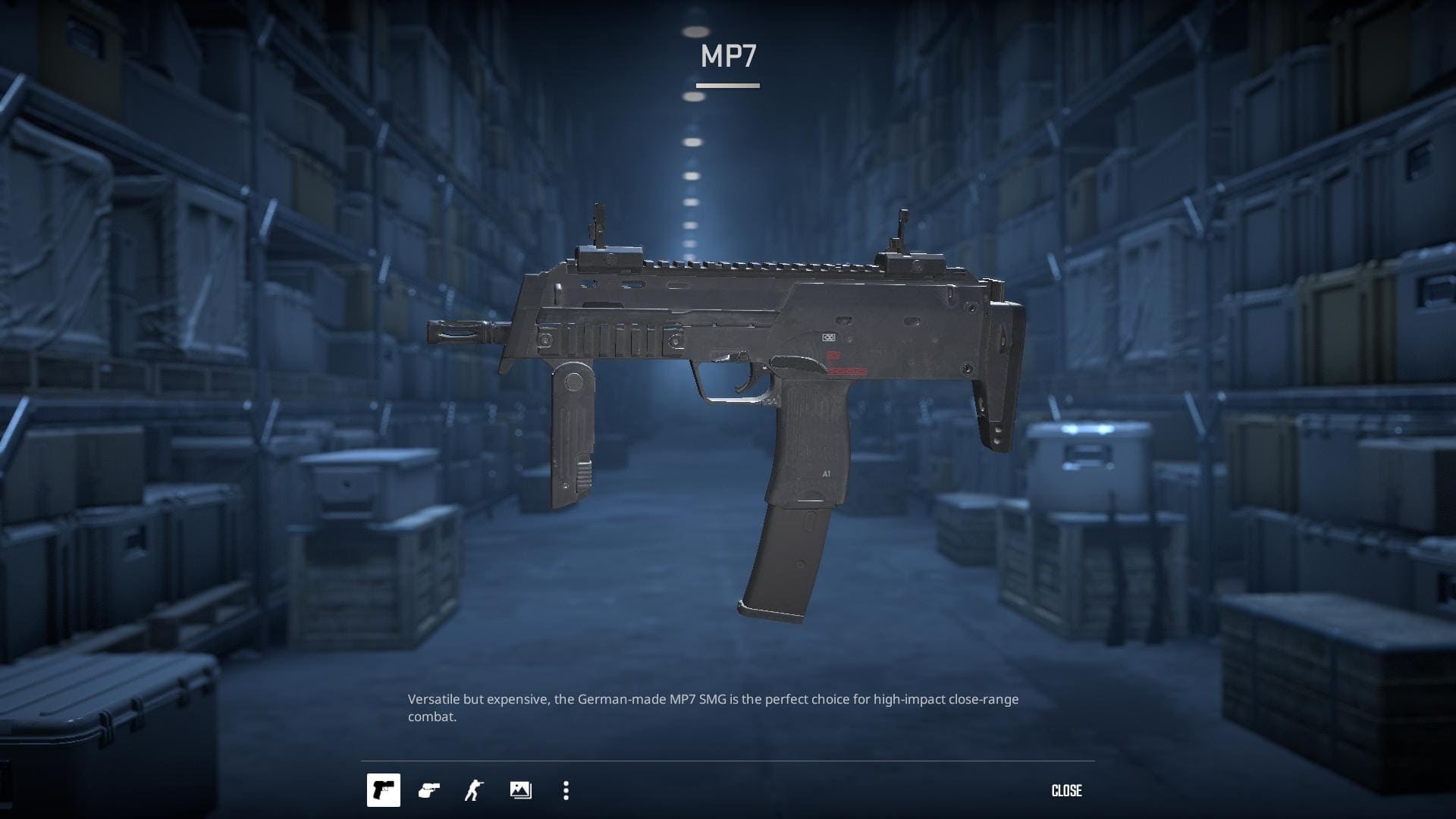
Image of the default MP7 submachine gun skin in Counter-Strike 2.

MP7

Accurate, easy to control, but more expensive. Decent in tight spots.

View Guide
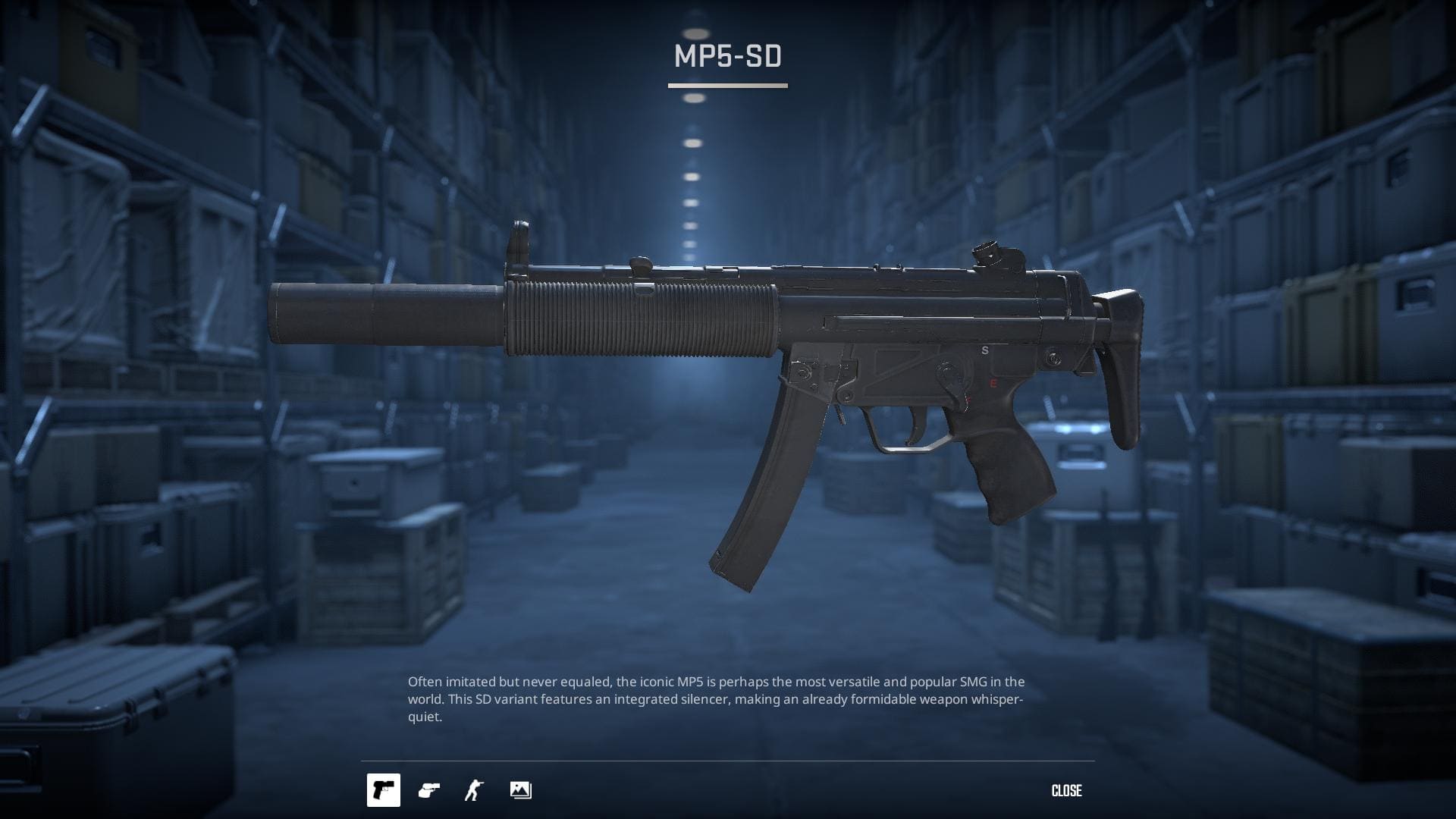
Image of the default MP5-SD submachine gun skin in Counter-Strike 2.

MP5-SD

Silenced, low-damage variant. Smooth but weak. Rarely seen in serious play.

View Guide
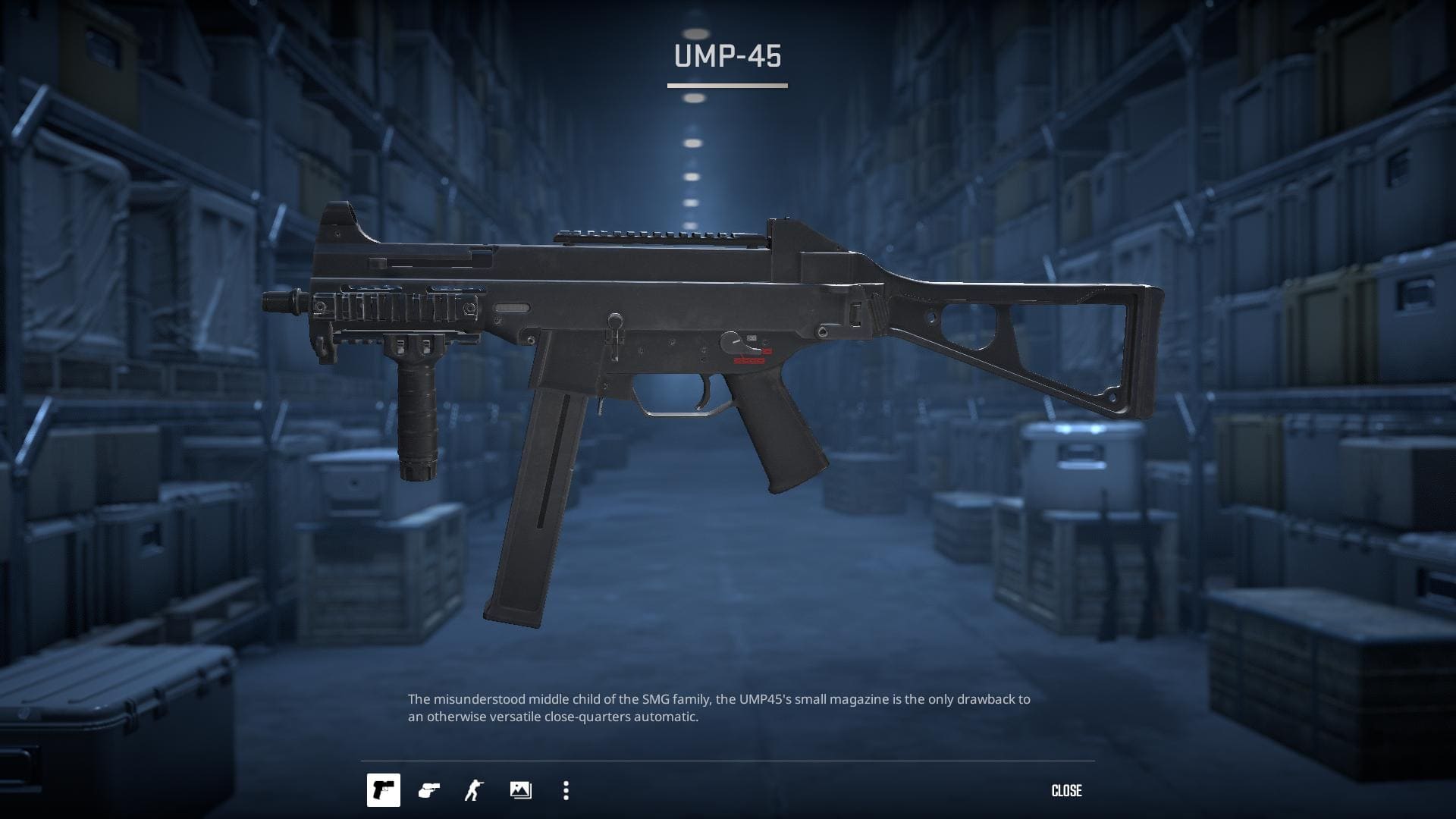
Image of the default UMP-45 submachine gun skin in Counter-Strike 2.

UMP-45

Reliable and well-rounded. Good armor penetration and consistent damage.

View Guide
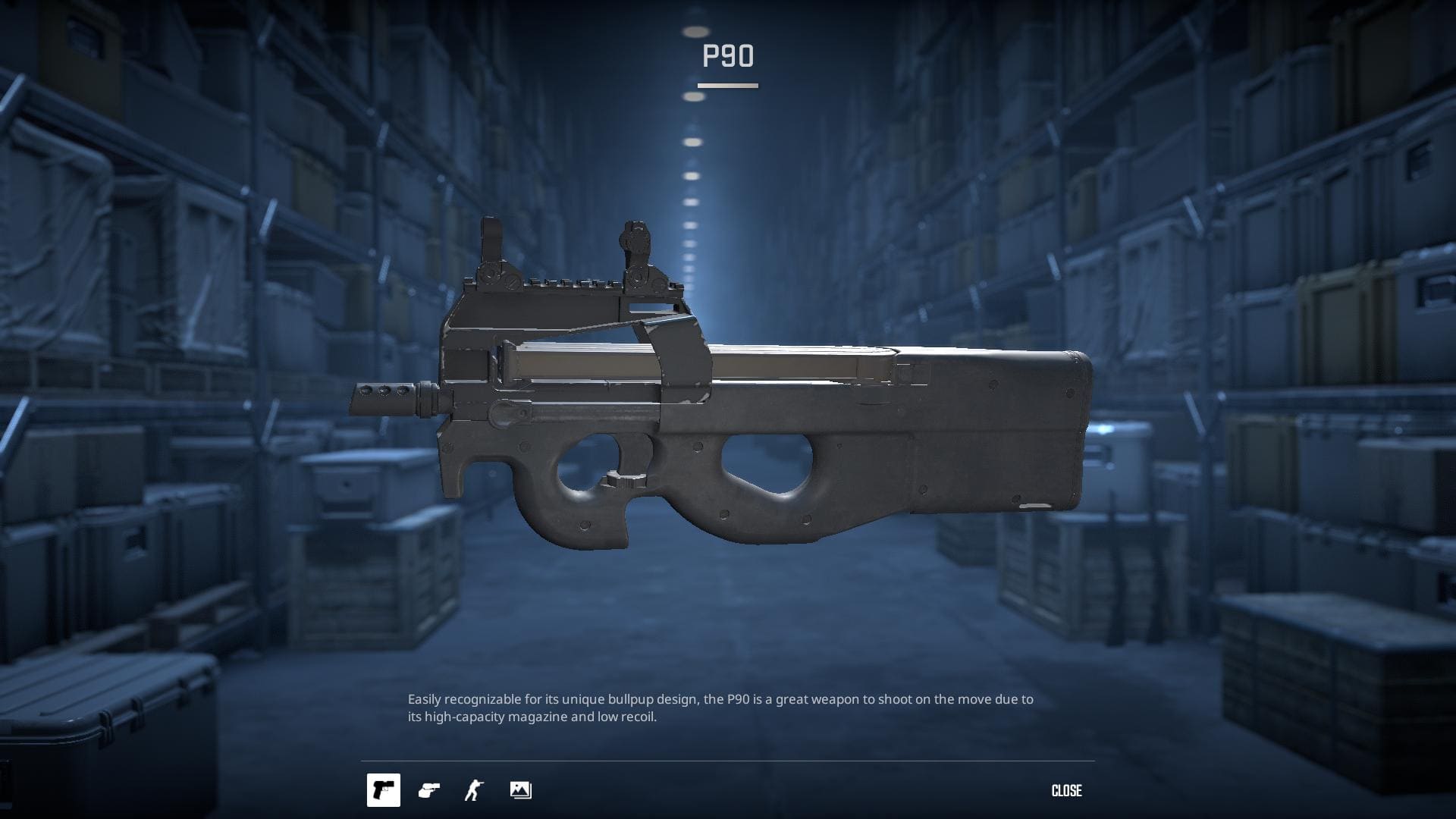
Image of the default P90 submachine gun skin in Counter-Strike 2.

P90

Spray-and-pray. Massive mag and high fire rate. Great for chaos and rushing.

View Guide
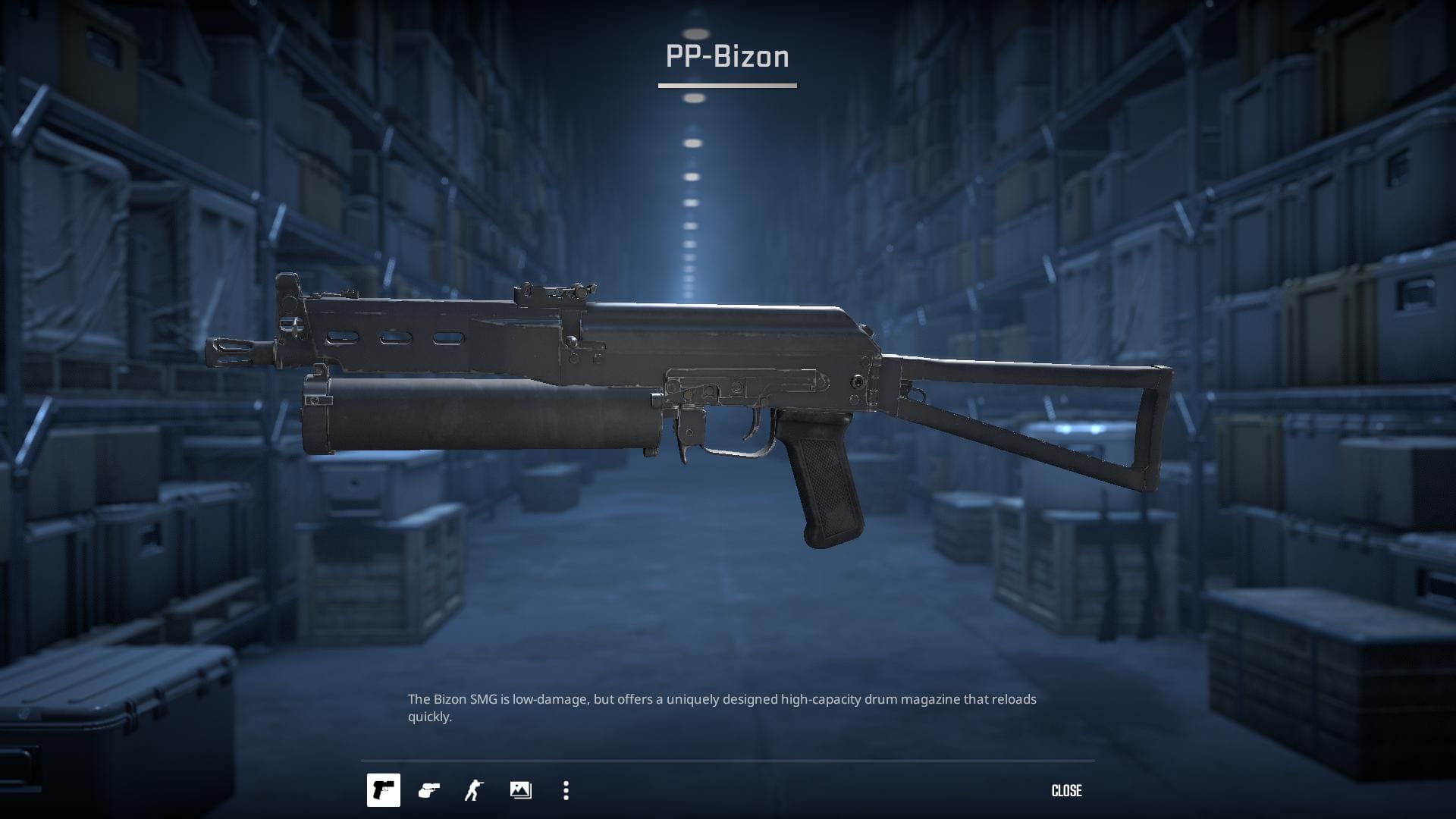
Image of the default PP-Bizon submachine gun skin in Counter-Strike 2.

PP-Bizon

Huge mag, very cheap, but low damage. Not reliable against armor.

View Guide

Shotguns

Shotguns are built for close-range combat. At longer distances, they’re nearly useless (except Nova) - but in tight hallways, doorways, or corners, they can delete an enemy with a single shot. Their main strengths are high damage up close and a strong kill reward. The weapon have heavy recoil, slow reloads, and significant damage falloff over distance. Use them only where you know the fight will be close.
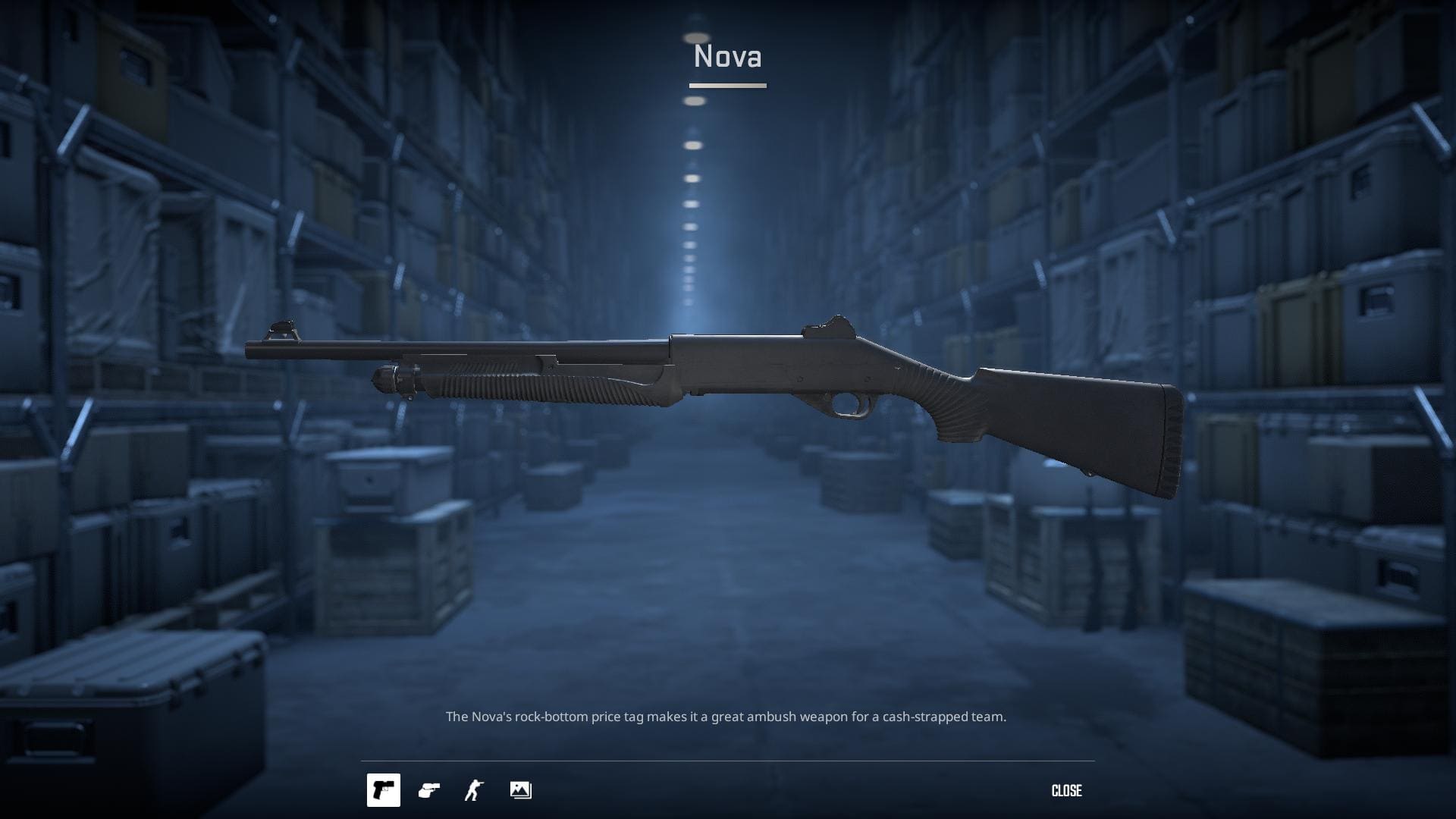
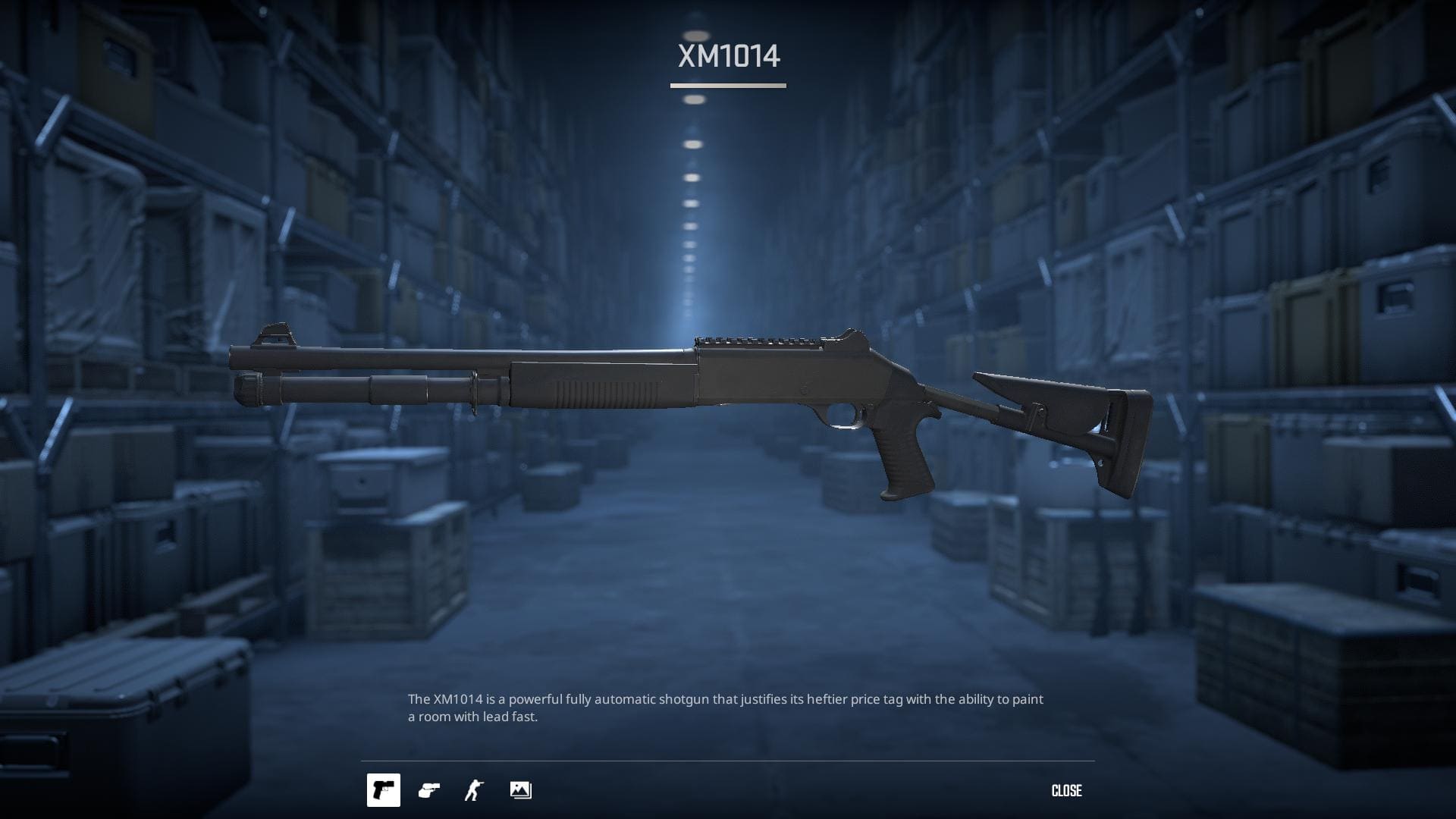
Image of the default Nova shotgun skin in Counter-Strike 2

Nova

The cheapest shotgun. Heavy damage, slow rate of fire. Deadly up close.

View Guide
Image of the default XM1014 shotgun skin in Counter-Strike 2.

XM1014

Semi-auto beast. Expensive, but brutal in tight areas and on eco rounds.

View Guide
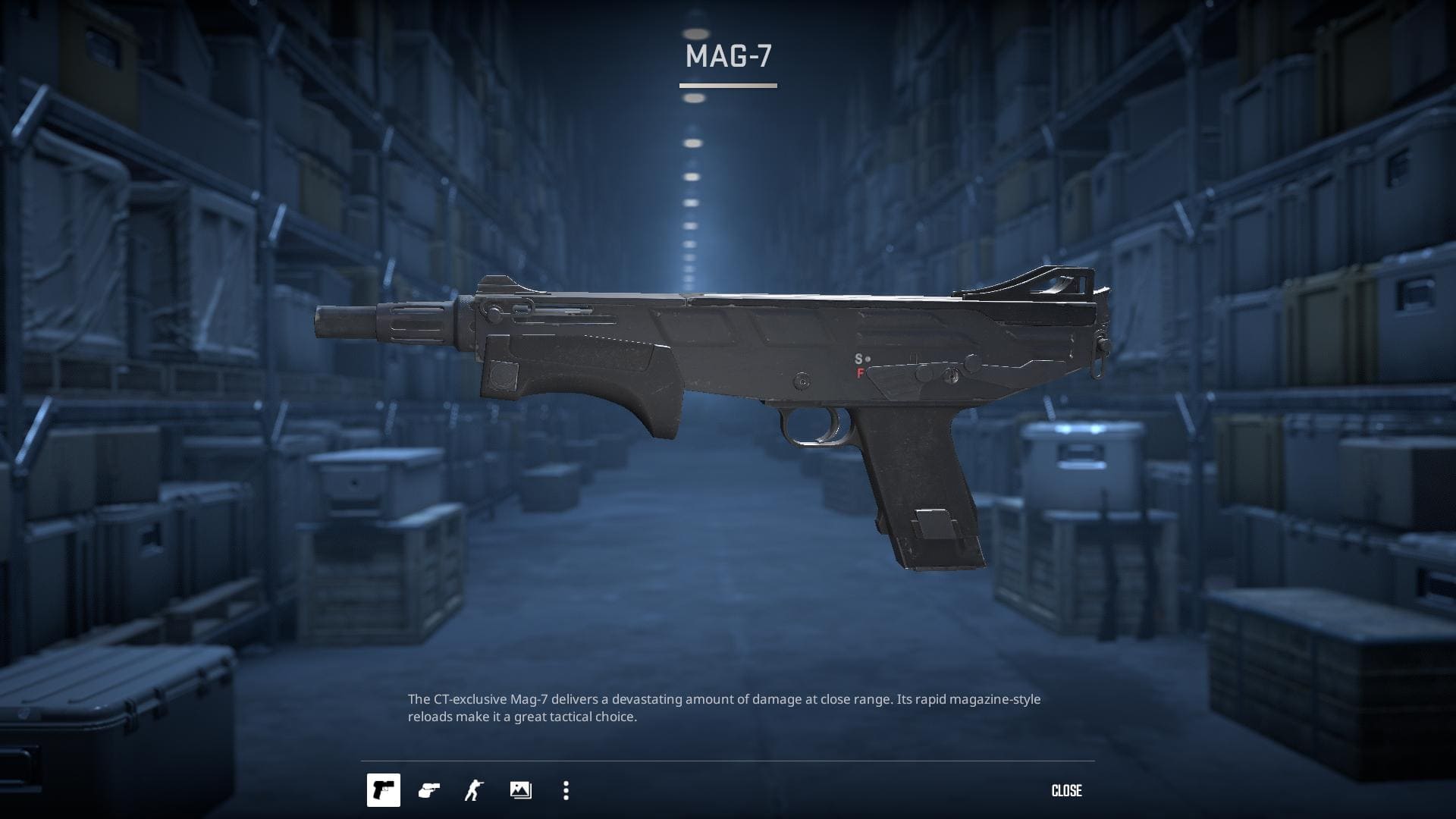
Image of the default MAG-7 shotgun skin in Counter-Strike 2.

MAG-7

CT-only. Quick to draw and packs a punch. Ideal for close-angle holds.

View Guide
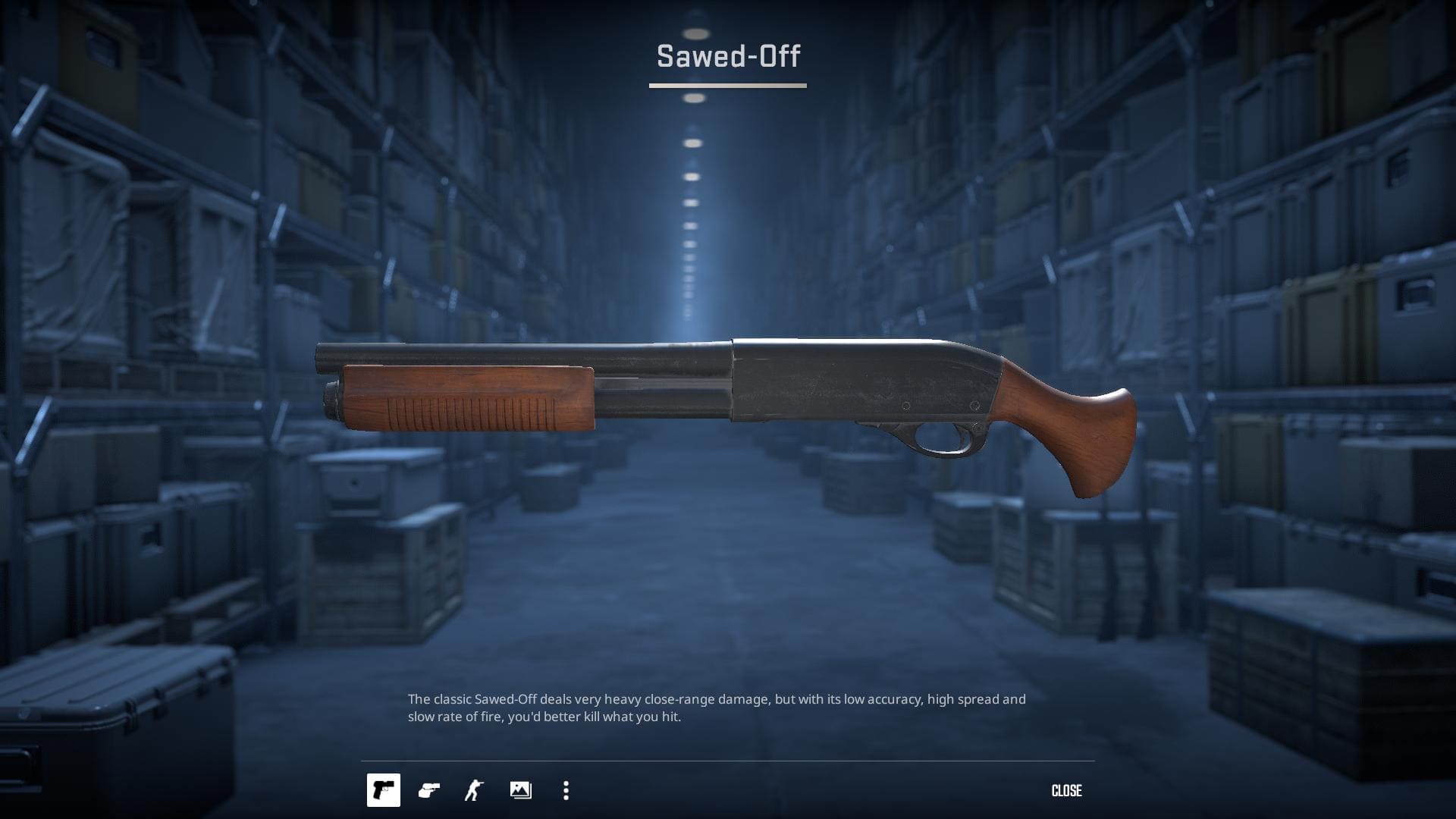
Image of the default Sawed-Off shotgun skin in Counter-Strike 2

Sawed-Off

T-side exclusive. Point-blank monster. Avoid open space at all costs.

View Guide

Rifles

Rifles are the standard weapons in CS2. They’re versatile, powerful, and effective at any range. Most weapons used in professional play are rifles. When you want a serious full buy, you pick a rifle.

Some rifles can one-shot headshot armored opponents (most notably the AK-47). Others rely more on consistency and controllable recoil. Spray control is one of the core skills required to play them well.

Choosing a rifle often means deciding between stability (M4), raw headshot potential (AK), and budget efficiency (Galil/FAMAS). The key is learning recoil control and understanding your position on the map.
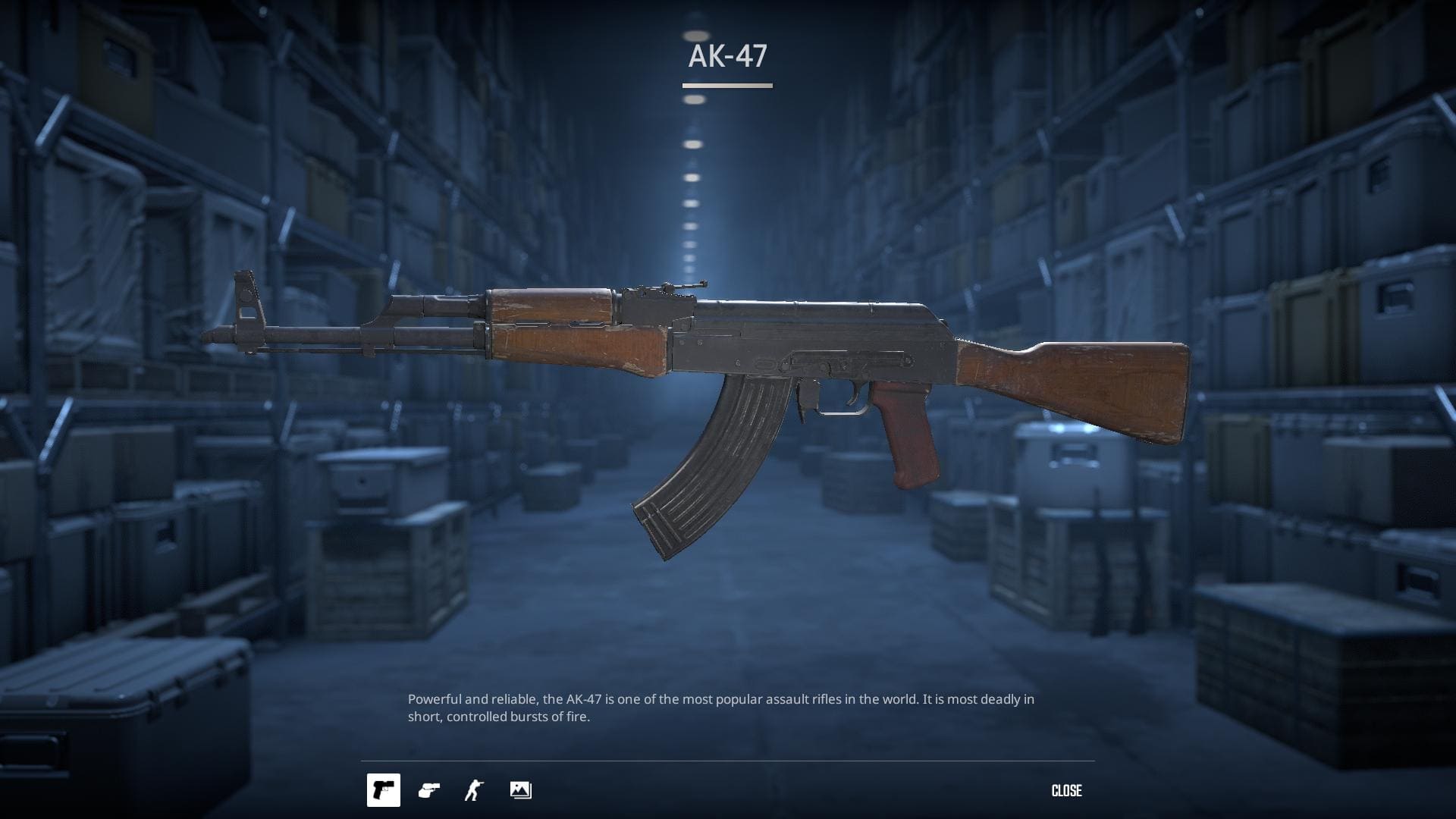
High-definition image of the default AK-47 skin in Counter-Strike 2, showcasing its detailed design and texture

AK-47

One-tap potential. High damage, tough recoil. Top-tier T-side rifle.

View Guide
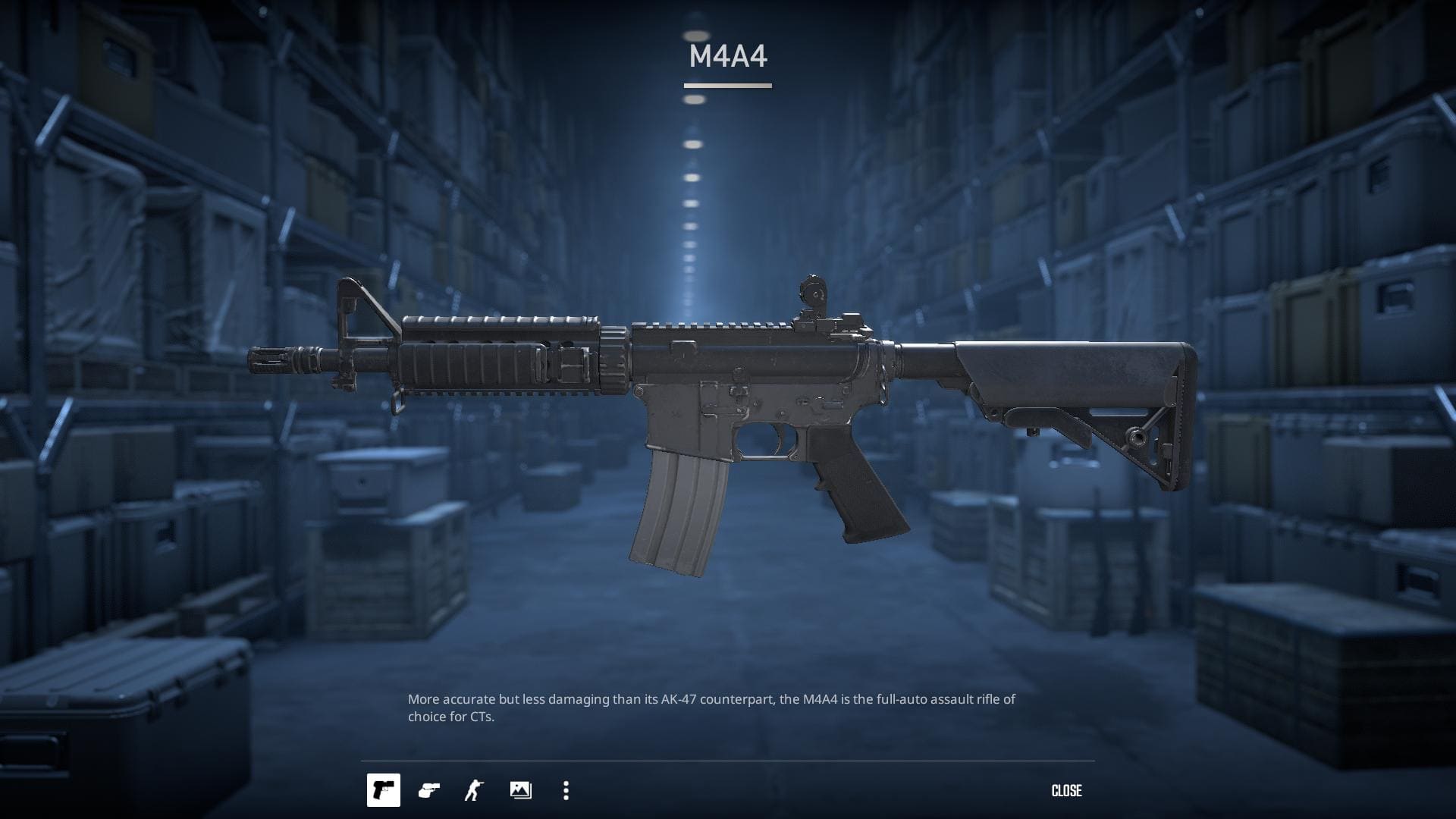
Image of the default M4A4 rifle skin in Counter-Strike 2

M4A4

CT workhorse. 30 rounds, stable spray, solid in almost any fight.

View Guide
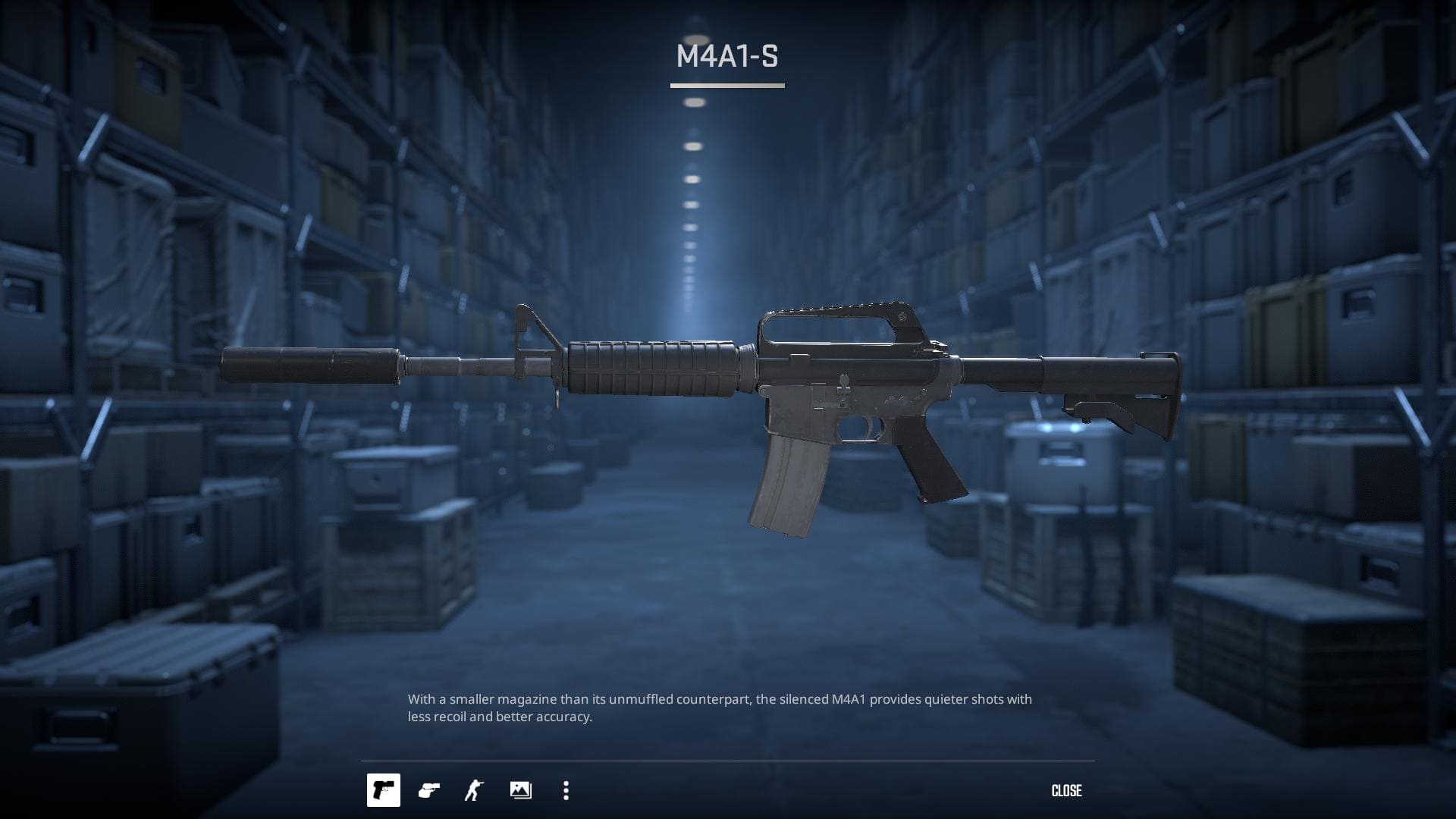
Image of the default M4A1-S rifle skin in Counter-Strike 2

M4A1-S

Silenced. Fewer bullets, but more accuracy. Great for lurking and defense.

View Guide
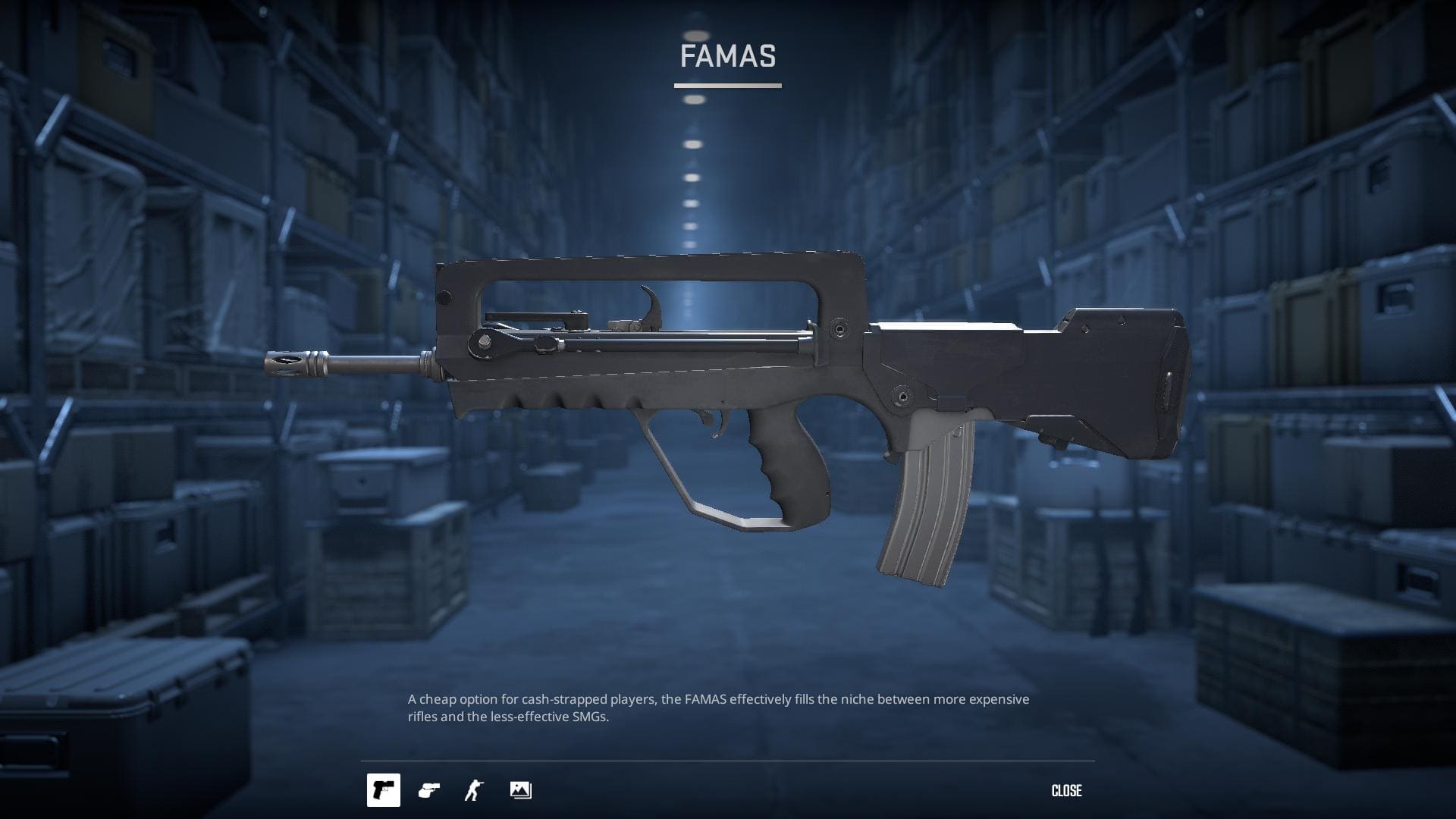
Image of the default Famas rifle skin in Counter-Strike 2

FAMAS

Budget rifle for CTs. Not great, but works in eco or force-buy rounds.

View Guide
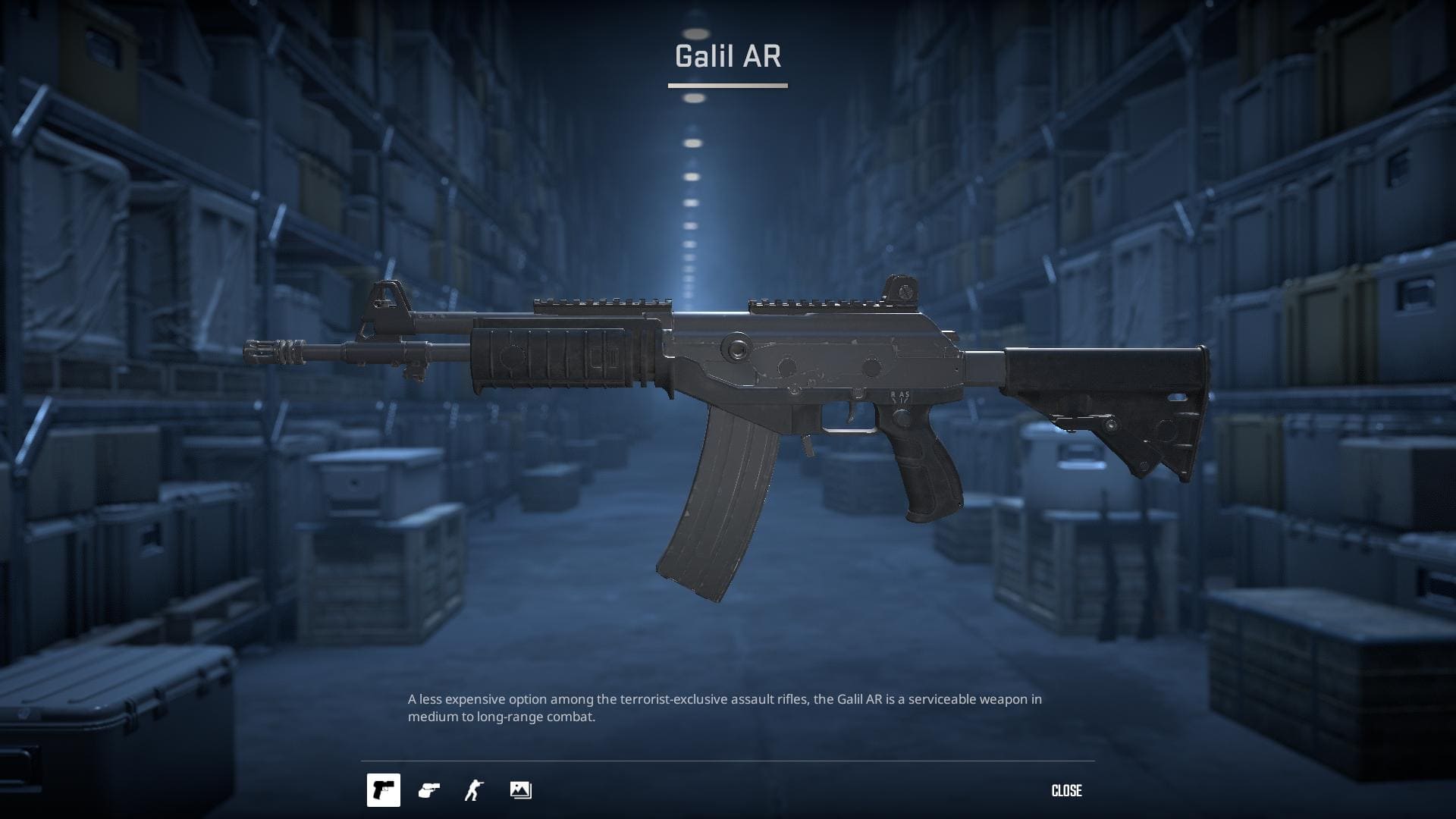
Image of the default Galil AR rifle skin in Counter-Strike 2

Galil AR

Cheap AK alternative. Worse spray and damage, but affordable option.

View Guide
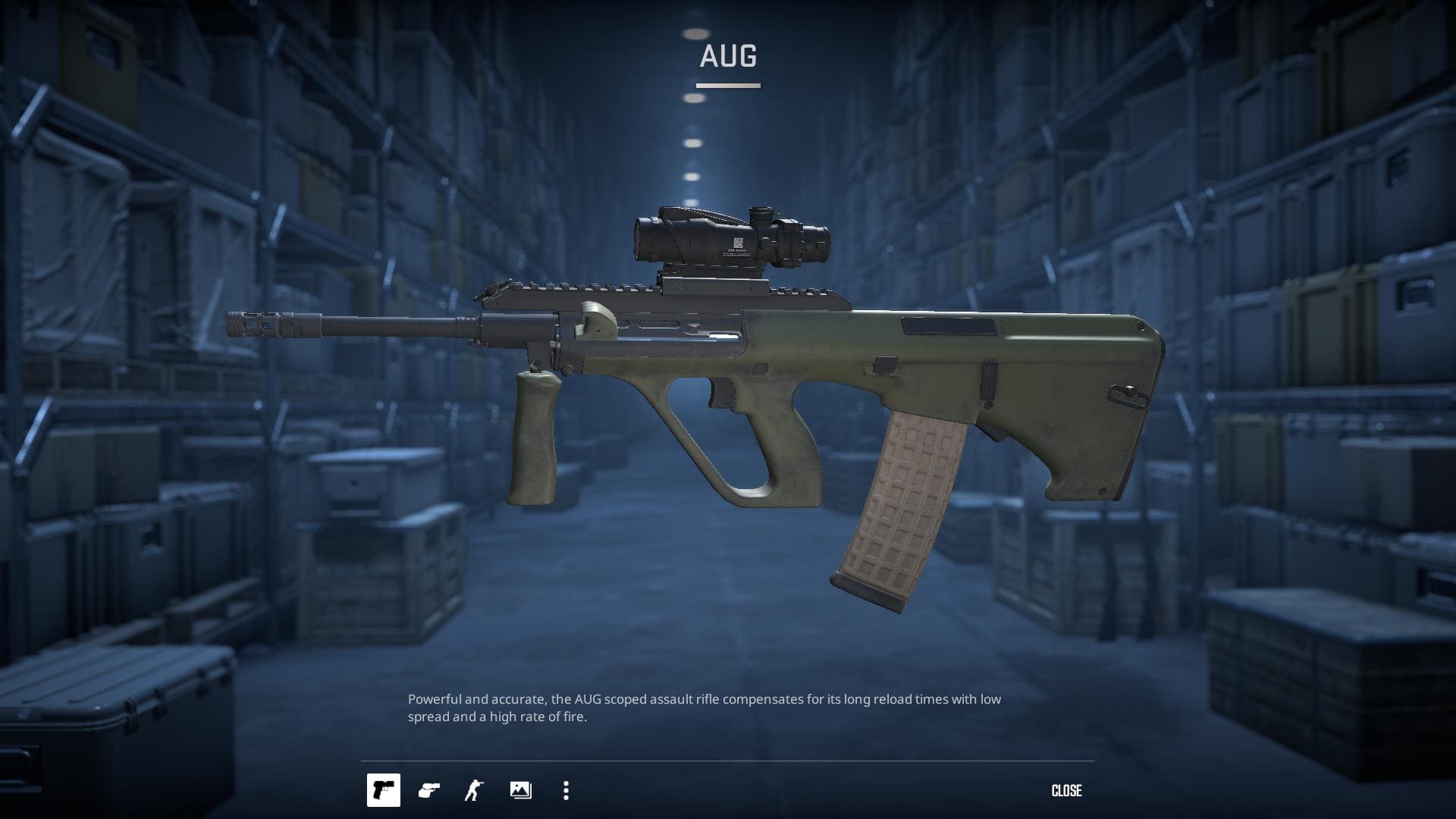
Image of the default AUG rifle skin in Counter-Strike 2

AUG

Scoped CT rifle. Accurate, easy recoil, but expensive and slower.

View Guide
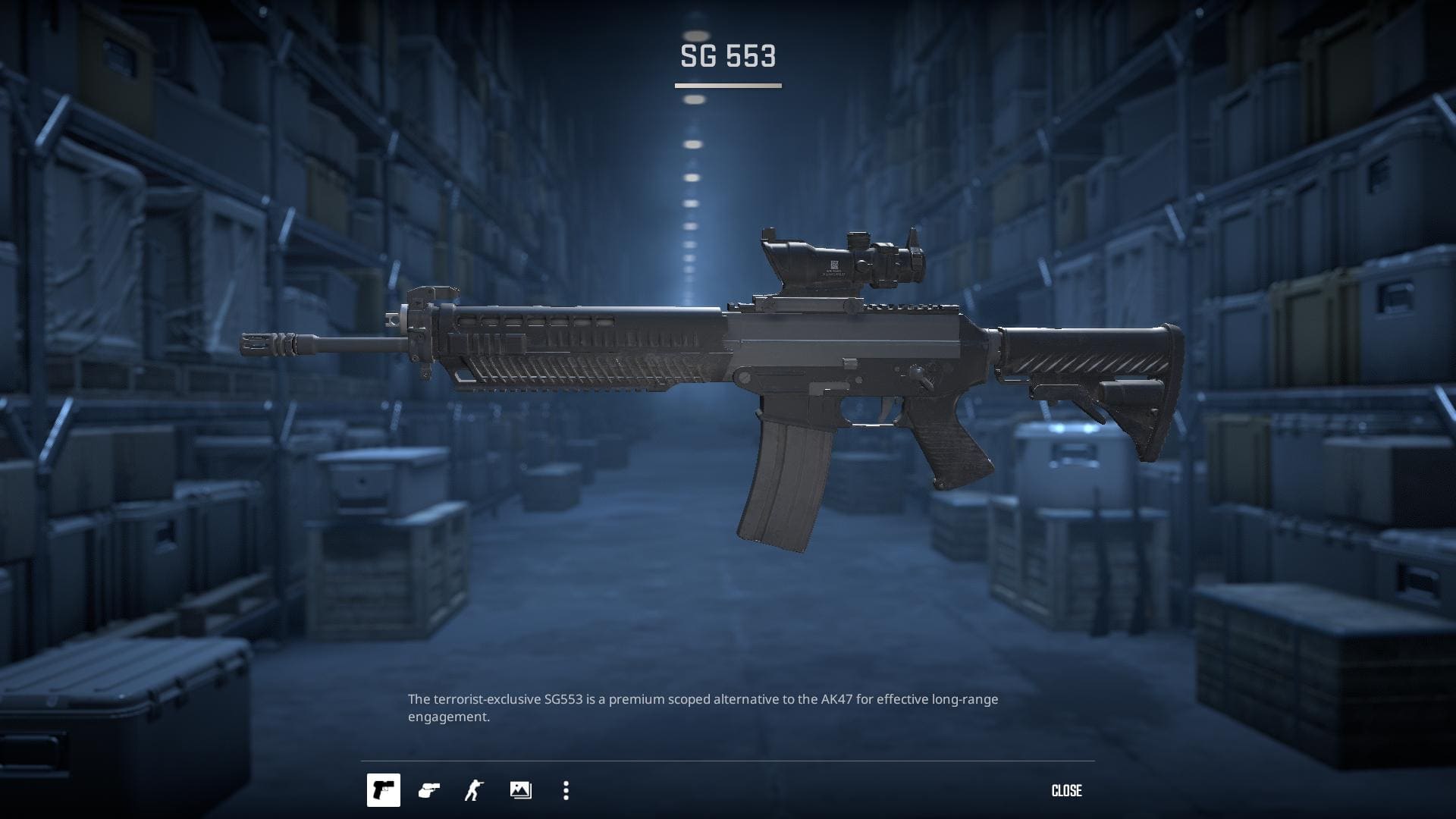
Image of the default SG 553 rifle skin in Counter-Strike 2

SG553

Scoped AK. Precise when tapped, risky when spraying. Niche pick for Ts.

View Guide

Sniper Rifles

Sniper rifles are built around precision. No spraying, no careless rushing - just holding angles, controlling space, and taking clean shots.
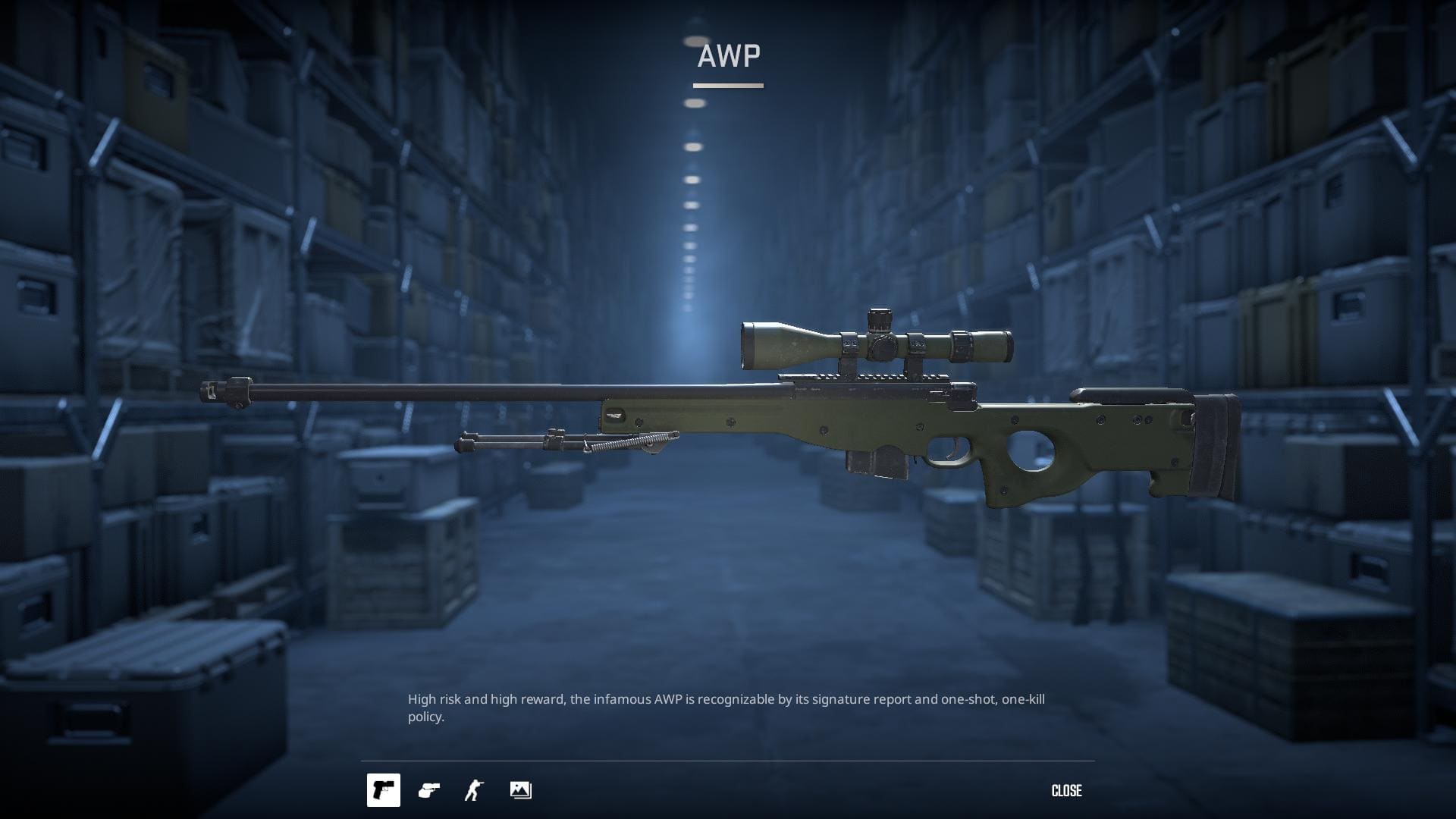
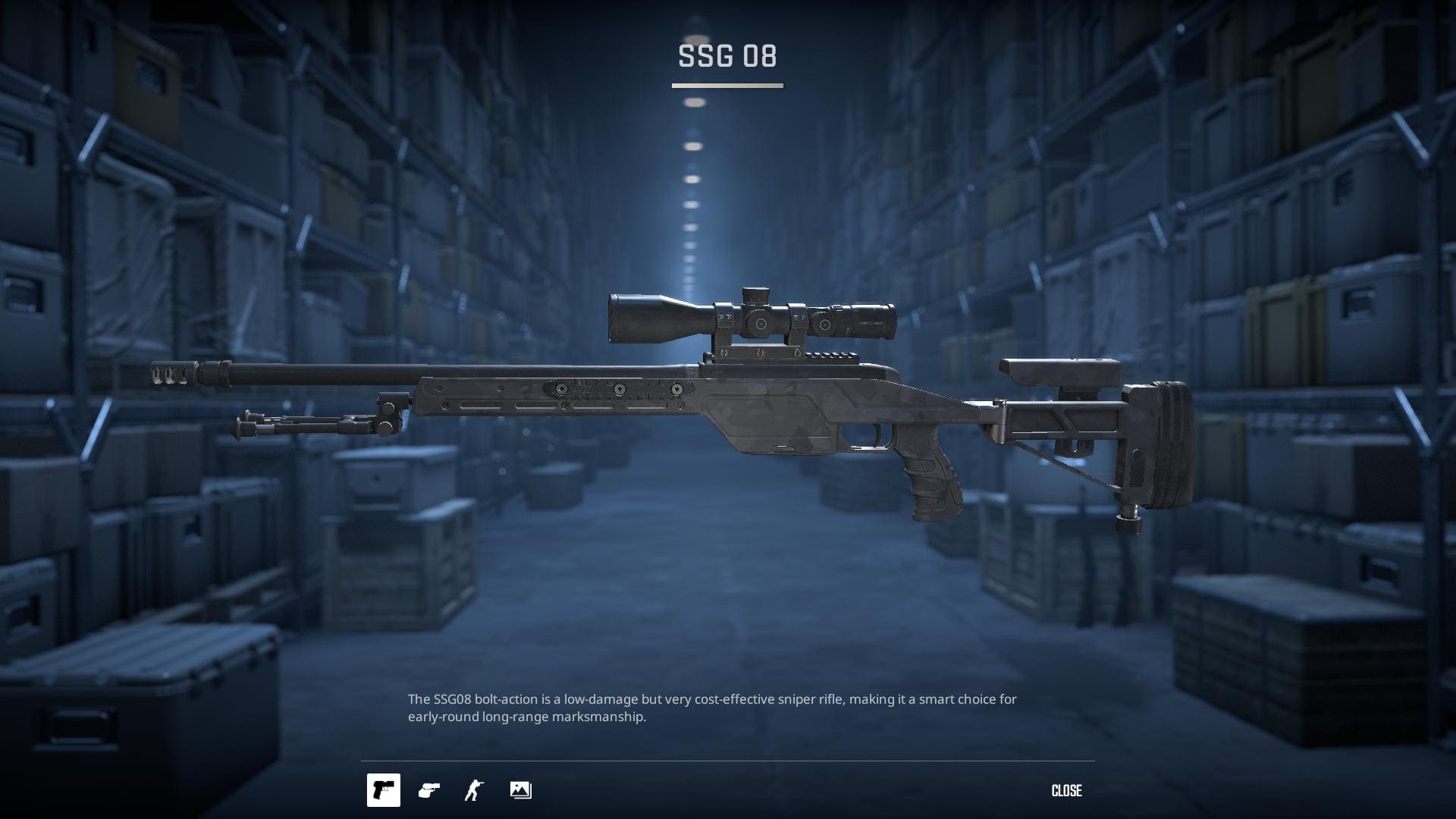
Image of the default AWP sniper rifle skin in Counter-Strike 2

AWP

The most iconic gun. One shot kills. Demands perfect aim and positioning.

View Guide
Image of the default SSG 08 sniper rifle skin in Counter-Strike 2

SSG 08

“Scout” sniper. Cheap, fast, and mobile. One-tap headshot potential.

View Guide
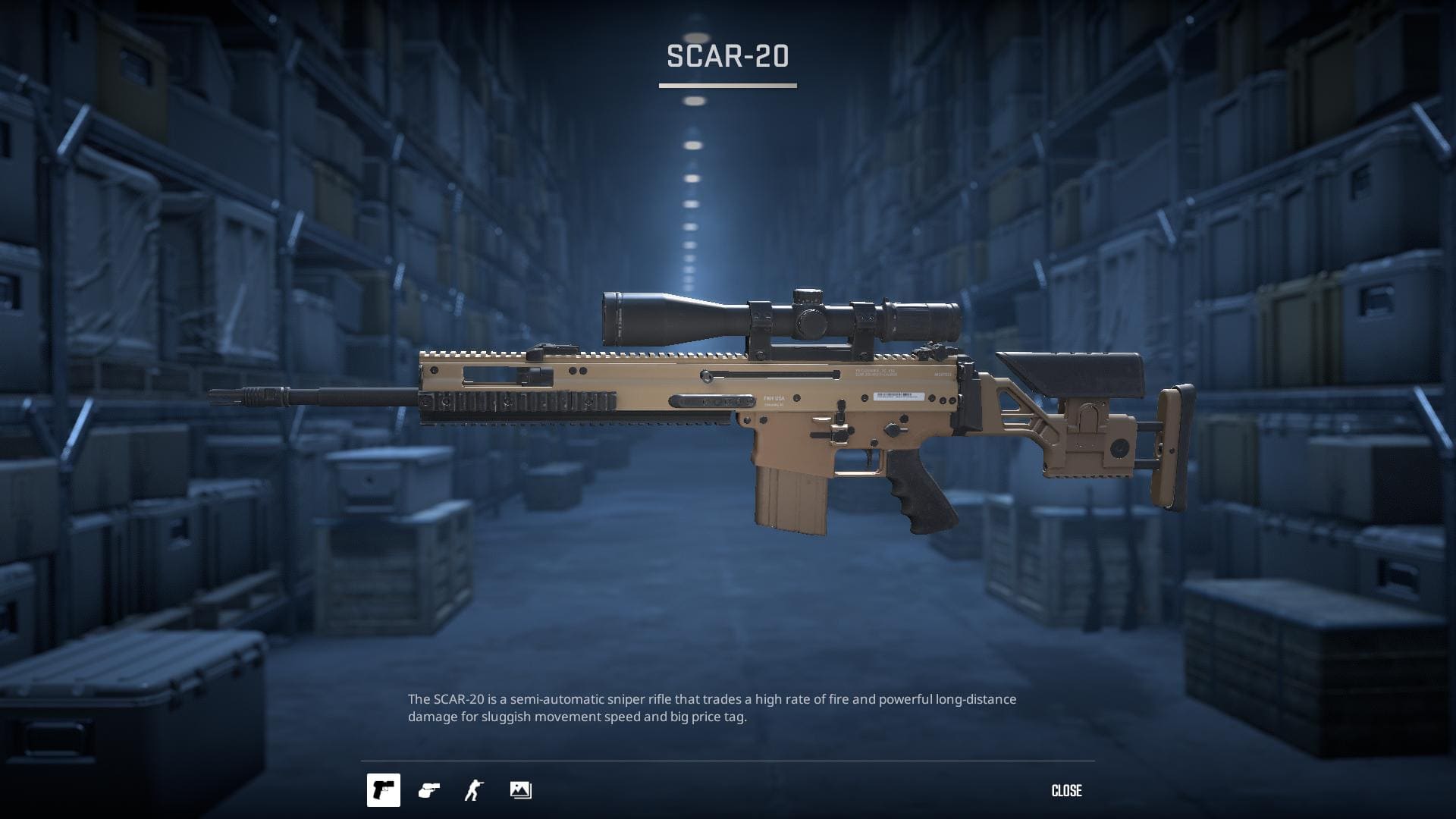
Image of the default SCAR-20 rifle skin in Counter-Strike 2

SCAR-20

CT-side auto sniper. High fire rate and damage. Heavy and costly.

View Guide
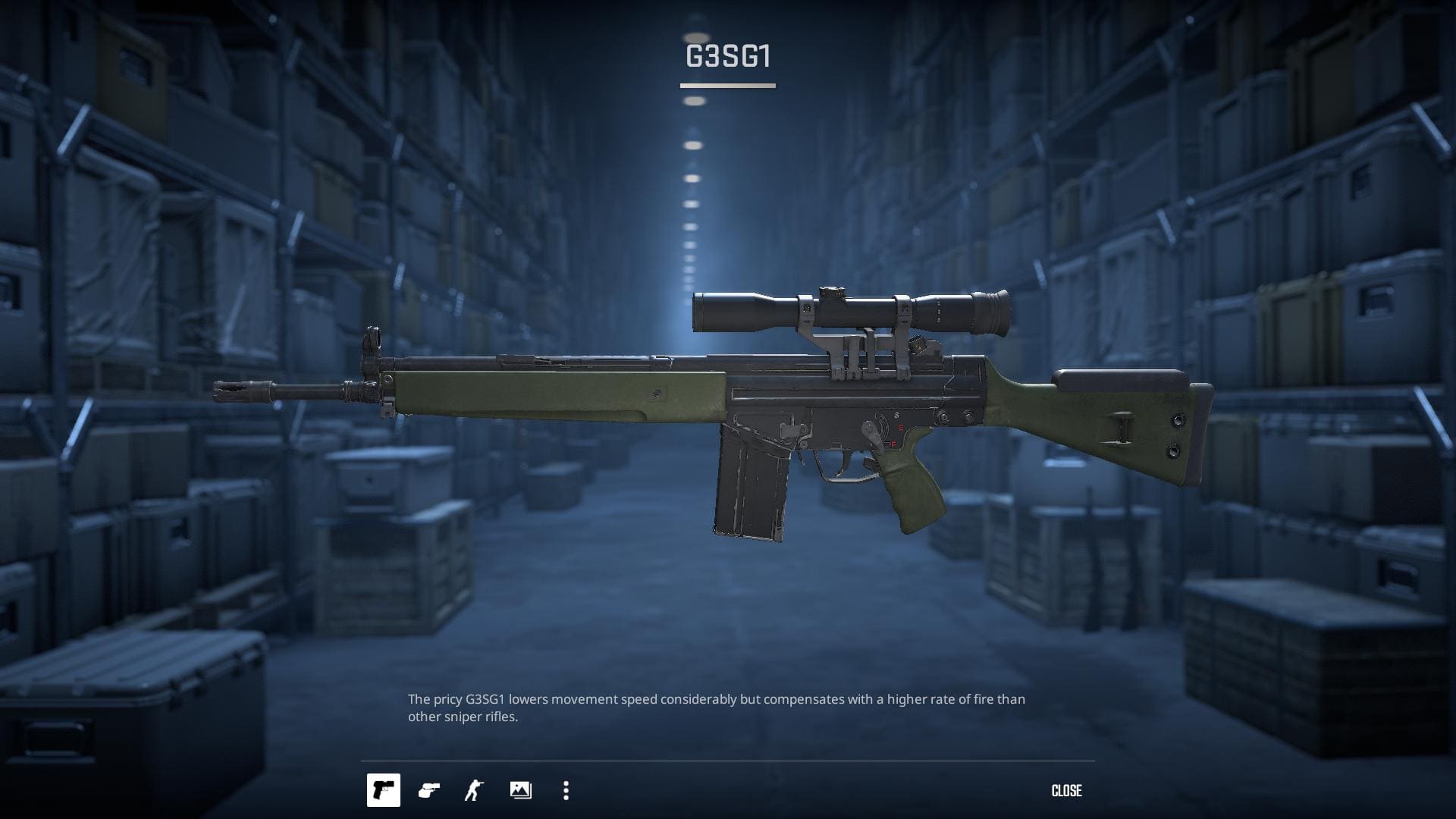
Image of the default G3SG1 rifle skin in Counter-Strike 2

G3SG1

T-side auto sniper. Strong but heavy and unpopular. Niche, yet deadly.

View Guide

Machine Guns

Heavy, slow, and expensive - machine guns in CS2 are rarely seen in serious play. But when they do appear, they can disrupt rounds quickly.

Their main advantage is sustained suppressive fire. They allow you to hold angles aggressively and punish pushes, but their cost and limited mobility make them a niche choice.
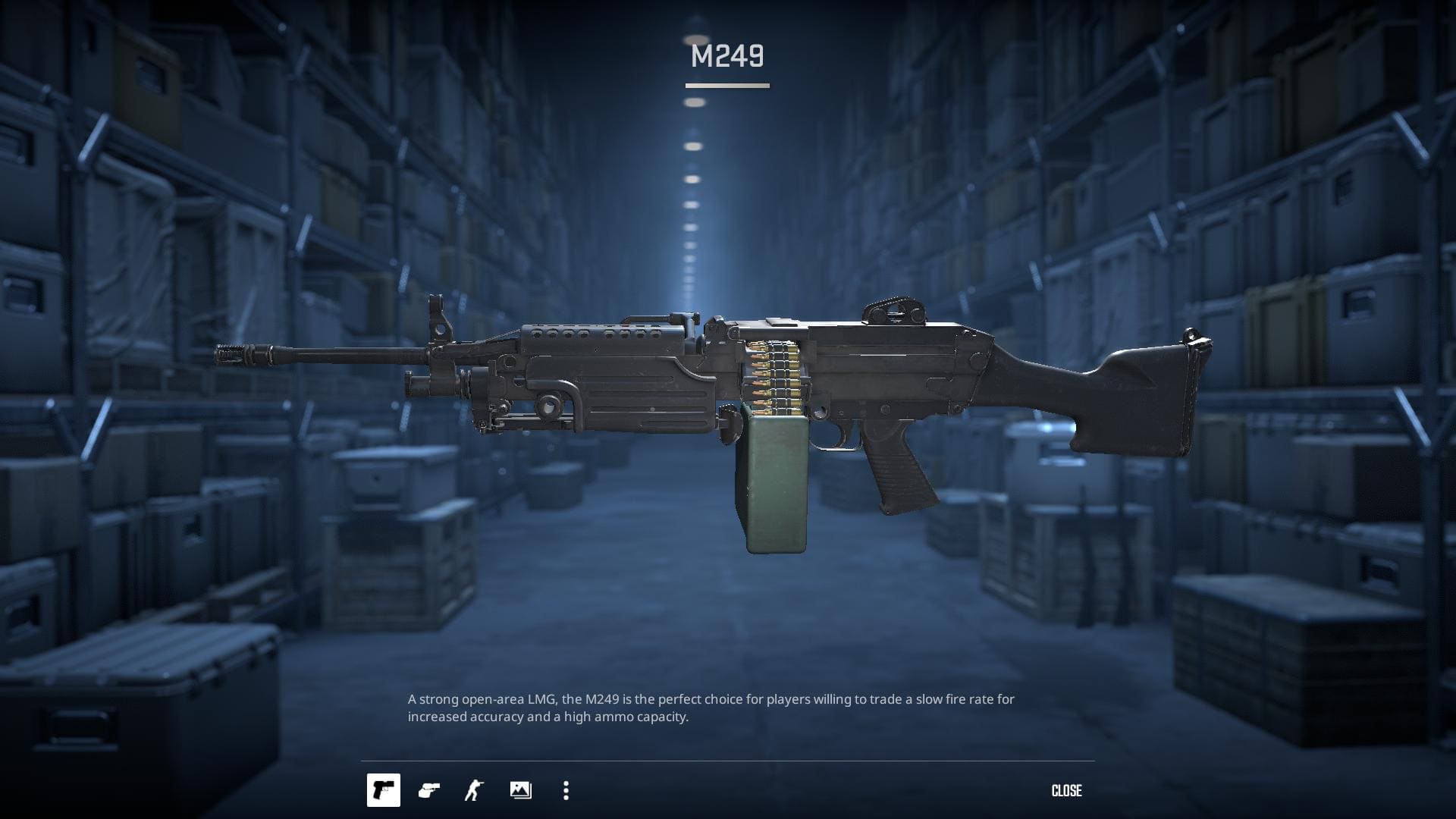
Image of the default M249 machine gun skin in Counter-Strike 2

M249

Big and expensive. Heavy recoil, slow startup. Meme-tier weapon – fun, but ineffective.

View Guide
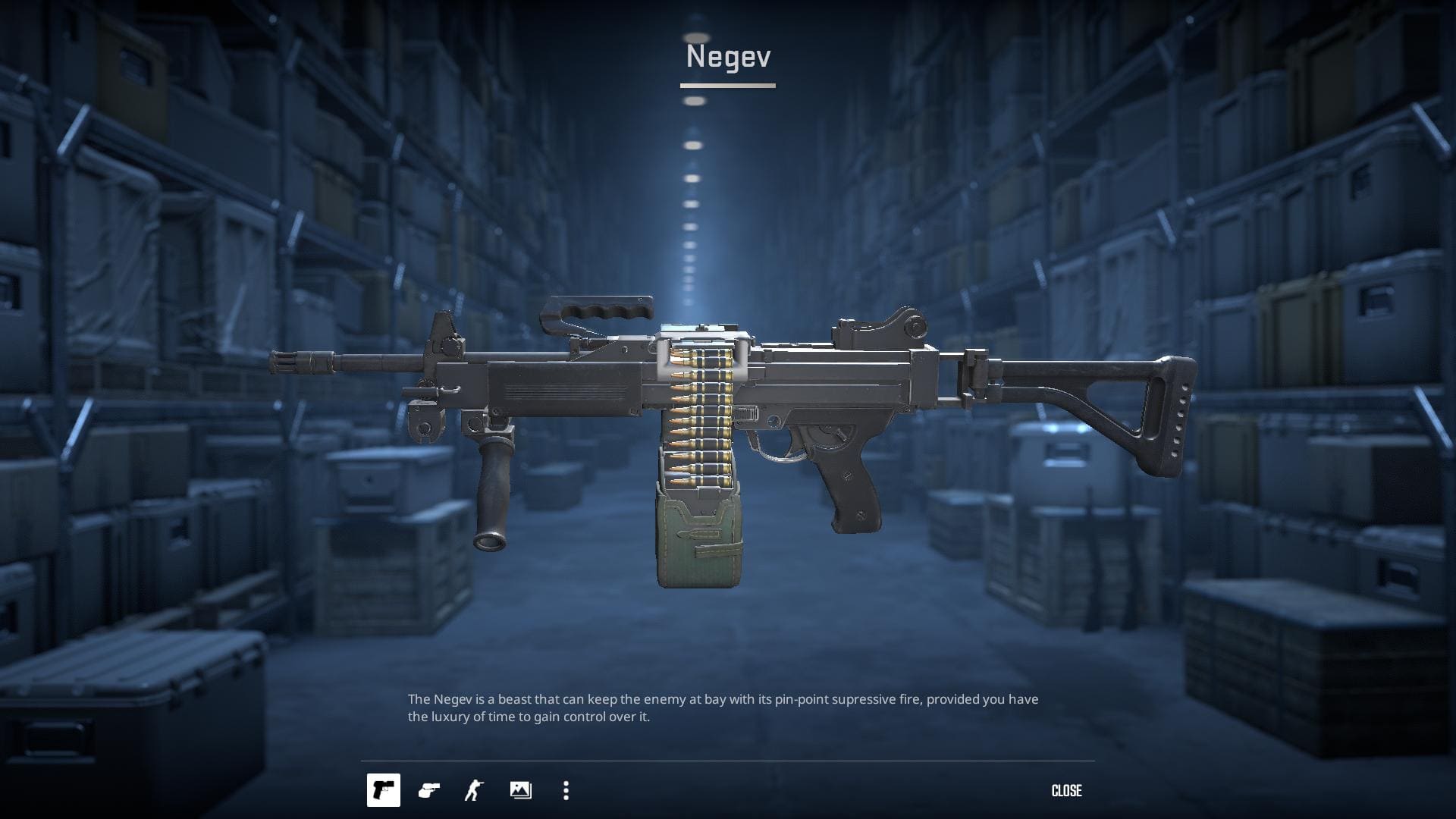
Image of the default Negev machine gun skin in Counter-Strike 2

Negev

Cheap for an MG. After first 10 bullets – pure accuracy. Great for spam and lockdown.

View Guide

Grenades & Utility

Grenades are not just support tools - they directly influence space, timing, and movement. Without a flash, pushing becomes harder. Without a smoke, you’re exposed.

In CS2, utility became more impactful, especially with object-based smokes that can be altered by explosions or gunfire.

HE Grenade

Deals direct damage. Explodes after ~1.5 seconds and hits for anywhere from 10 to 60 depending on distance and armor. Useful for damaging grouped players, finishing low HP opponents, etc.

Effective HE usage is about prediction - not where the enemy is, but where they will be.

Flashbang

Blinds anyone looking at it for up to ~2.5 seconds. Even partial flashes can disrupt aim and positioning. Can be bounced off walls, thrown around corners, or used through smoke. Essential for entries, retakes, and clutch situations.

Smoke Grenade

Lasts up to ~18 seconds and blocks vision. In CS2, smokes are volumetric objects - they can be disturbed by HE grenades or briefly cleared with gunfire. Proper smoke usage controls angles and limits enemy information.

Molotov (T) / Incendiary (CT)

Creates fire on the ground for ~7 seconds. Deals damage over time and forces movement. Used to block pushes, delay executes, or clear common hiding spots.

Decoy Grenade

Simulates weapon sounds after landing. Can mislead opponents or mask movement. In CS2, it also interacts with smokes similarly to HE grenades.

Zeus x27 - Taser

A short-range one-shot weapon. Effective only at very close distance (around 183 units). Instantly lethal if it connects, but provides no kill reward.

Knives

A knife in CS2 isn’t just a backup weapon - it’s primarily used for faster movement and close-range situations. Knife kills award $1500, significantly more than a standard rifle kill.

Knives have two attack modes:

  • Left click - a fast slash that deals around 40 damage.
  • Right click - a slower stab that deals around 100 damage and guarantees a one-shot kill from behind, even against armored opponents.

CS2 Weapons Table - Stats, Compare, and Filter

This table is built for quick comparison. Instead of explaining how damage works, it lets you see the numbers for every weapon in one place - base damage, armor penetration, fire rate, kill reward, and one-shot headshot potential.

You can:

  • Browse weapons by category (pistols, SMGs, rifles, sniper rifles, etc.)
  • Sort by cost, damage, fire rate, or kill reward
  • Compare multiple weapons side-by-side
  • Instantly see which guns can secure one-tap headshots
  • Identify budget-friendly options for eco or force rounds

The goal of this table isn’t to repeat mechanics - it’s to help you make faster decisions.

Сhoosing between a Galil and a FAMAS, comparing SMGs after a pistol win, or looking for the cheapest rifle with reliable headshot potential, the table gives you the numbers without guesswork.

All stats are based on current CS2 balance values and are updated when the game changes.

Compare and Filter With Precision

The Compare tool helps you analyze multiple weapons at once - not just surface-level stats, but full performance breakdowns across all hitboxes. You can instantly activate the 1-Shot HS toggle to filter relevant options, while built-in sorting tools let you organize weapons by cost, damage, fire rate, and other key metrics. It’s especially useful when searching for the best eco or force-buy option. Along the way, you’ll see important details like kill reward, team side (T/CT), and overall DPS output, and the side-by-side view makes it easy to find the right balance between budget and lethality.

Select Name Type Side Price Damage ROF Armor Pen Kill Reward 1-Shot HS Description

Recoil Control & Spray Patterns

In CS2, guns aren’t just "point and shoot". Every weapon has a spray pattern - a fixed trajectory your bullets follow when you hold down fire. If you don’t control it, your shots will miss - even if your crosshair is on target.

Each weapon has its own pattern. The AK-47 pulls up and to the left, while the M4A4 is a bit straighter but still jumps around. In CS2, these patterns were slightly updated - they feel smoother.

You can control recoil by learning the spray pattern - simply move your mouse in the opposite direction while firing. It sounds complicated, but it isn’t: most rifles climb almost straight up for the first six shots, and that initial movement is relatively easy to manage. If you can consistently control at least those first six bullets, you’ll win most duels.

Want to get better? Practice on recoil training maps from the Steam Workshop - they really do help your aim.

Skins & Weapon Inspection

In CS2, it’s not only about how you play - it’s also about appearance. Weapon skins and the inspection feature add personality and visual identity without affecting gameplay balance.

Weapon Skins. Skins are one of the defining features of Counter-Strike, first introduced in the Arms Deal update in CS:GO. They are purely cosmetic: they do not change weapon stats or behavior, but allow players to customize weapons with different finishes and designs.

StatTrak™ is an optional feature that tracks confirmed kills with a specific weapon. For many players, it adds long-term value to a skin.

Weapon Inspection. The inspect feature allows players to view their weapon in-game with a dedicated animation. It was introduced in CS:GO and refined in CS2 with updated models and smoother animations.

You can inspect your weapon by pressing the Use key (default: F) when not shooting or reloading.

The animation is client-side - only you and first-person spectators can see it. It can be canceled at any time by moving, shooting, or switching weapons.

Mistakes & Tips

Even strong aim won’t save you from repeated mistakes. In CS2, small errors in buying, positioning, or timing often cost more rounds than missed shots.

This section highlights the most common weapon-related mistakes players make, along with practical tips that help you stay consistent and avoid unnecessary losses.

Common Mistakes

  • Buying an AWP "just because". If you can’t play AWP - don’t buy it. It’s not a free kill, it’s a responsibility.
  • Skipping utility. An AK with no nades is weaker than a Galil with a flash. Utility wins rounds.
  • Spraying at every range. Even the M4 has limits. Use bursts at medium range, taps at long. Learn when to stop holding mouse1.
  • Ignoring team economy. Buying "because you can" is how your team goes broke. Sync with teammates, eco when needed.
  • Use knife to move. You run slower with a rifle. Use your knife - but only when you’re sure it’s safe.
  • Shooting while moving. Most guns in CS2 are only accurate when standing still. Especially rifles and snipers. (Knives don’t care though =))
  • Playing solo. CS is a team game. No one is truly a lone warrior, no matter how many frags you get or how sharp your aim is. Success comes from working together.

Useful Tips

  1. Watch your demos - see where you died for no reason.
  2. Play with purpose - practice specific guns, grenades, or positions.
  3. Don’t save grenades - one flash can decide a round.
  4. Play with people who talk - even simple comms make a huge difference.
  5. Warm up before matches - 5 minutes of aim training goes a long way.

Conclusion

Weapons in CS2 are more than just stats and damage numbers. They’re part of a larger system that includes economy, positioning, timing, and utility.

The difference isn’t just aim. It’s understanding when a rifle makes sense, when a cheaper option is smarter, and when saving is better than forcing. It’s knowing how many bullets you actually need to win a fight and where to place them.

Once you understand how these pieces work together, the game becomes more predictable. You stop buying randomly. You stop taking unnecessary duels. And your rounds start feeling controlled instead of chaotic.